Song Meaning
This track paints a chilling portrait of an unstoppable, destructive force, presented as a soulless machine driven by an insatiable hunger for victory. It moves relentlessly forward, tearing through everything in its path, both physical and emotional. The lyrics establish a tone of dread and inevitability, where resistance is futile and leads only to erasure. The dominant imagery is one of overwhelming power and brutal efficiency, leaving no room for doubt about its destructive purpose.
The central tension lies in the contrast between the force's relentless advance and the devastation it leaves behind. It's described as "swift and cunning," "tireless and savage," preying on fear and trampling life while "bleeding all hopes." This relentless forward motion, likened to "thunder for glory," is not for any noble cause but for the sake of the battle itself, existing "for the war." The lyrics suggest a cycle of destruction that is deliberately initiated and then seemingly controlled, only to be unleashed again.
The most striking aspect of the craft here is the personification of this destructive entity as a machine that also possesses a terrifying, almost sentient will. Phrases like "hungers for victory" and "breathing its chaos" imbue it with agency, while its actions are brutally physical: "tear through the soil," "striking down the opposition," "cutting the throats." The chilling conclusion, "And when it's done / We'll call it back to march again," reveals a disturbing sense of control and premeditation behind the chaos, framing the destruction as a tool to be wielded and then stored away, ready for future deployment.
What makes these lyrics so effective is their stark, unadorned depiction of pure, amoral power. There's no attempt to justify the force's actions beyond its own inherent drive for conquest and chaos. The repeated emphasis on its unstoppable nature and the futility of resistance creates a palpable sense of dread. The final lines, in particular, land with a heavy impact, suggesting that this "ruin" is not an accident but a calculated, recurring event, leaving the listener with a profound sense of unease about the cyclical nature of such destructive forces.
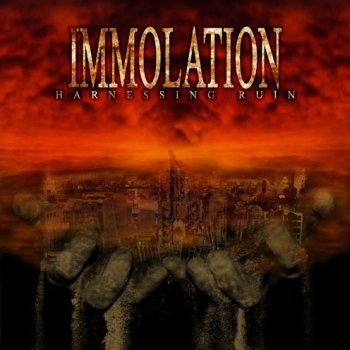
 View Artist