Song Meaning
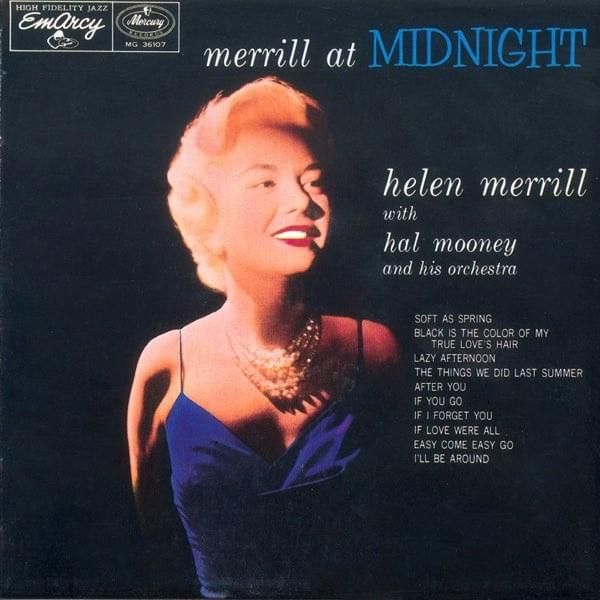
Helen Merrill's rendition of "Black Is the Color of My True Love's Hair" isn't just a folk standard; it's a masterclass in emotional sublimation. The lyrics, deceptively simple at first glance, unpack a complex tapestry of devotion, longing, and a hint of existential dread. It's not just about romantic love; it’s about an all-consuming adoration that borders on the obsessive. The singer isn't merely in love; she loves 'the ground whereon he stands,' an image that suggests both reverence and a kind of self-effacement. This isn't a love of equals; it's a love where one party seemingly elevates the other to an almost unattainable pedestal. It's a kind of 'object love' where the lover's identity is almost subsumed by the object of their affection.
The song's verses paint a picture of a love both present and absent. The 'winter's passed,' suggesting a period of hardship or separation, yet the hope for reunion persists. This tension between absence and anticipated presence fuels the song's emotional core. The lines about mourning by the Clyde and suffering 'death one thousand times' aren't just hyperbolic expressions of sadness; they hint at a profound sense of loss and a willingness to endure immense pain for the sake of this connection. It's a love that transcends rationality, pushing the boundaries of emotional endurance. Is this love a healthy connection, or a co-dependent tie? The song does not overtly state the answer, but the lyrics nudge the listener to consider it.
Ultimately, the song meaning of "Black Is the Color of My True Love's Hair", as interpreted through Merrill's haunting delivery, lies in its exploration of love's darker edges. The final verses, a repeated affirmation of love and a wistful farewell, underscore the enduring nature of this devotion, even in the face of potential heartbreak. The prettiness, the neat hands, the dark hair - all beautiful, but all potentially indicative of an idealized projection rather than a grounded relationship. The song is a reminder that love, in its most intense forms, can be both beautiful and terrifying, a force that can elevate us to ecstatic heights or plunge us into the depths of despair. Whether this is 'true love' or a manifestation of deeper psychological fixations is left open to interpretation.
 View Artist