Song Meaning
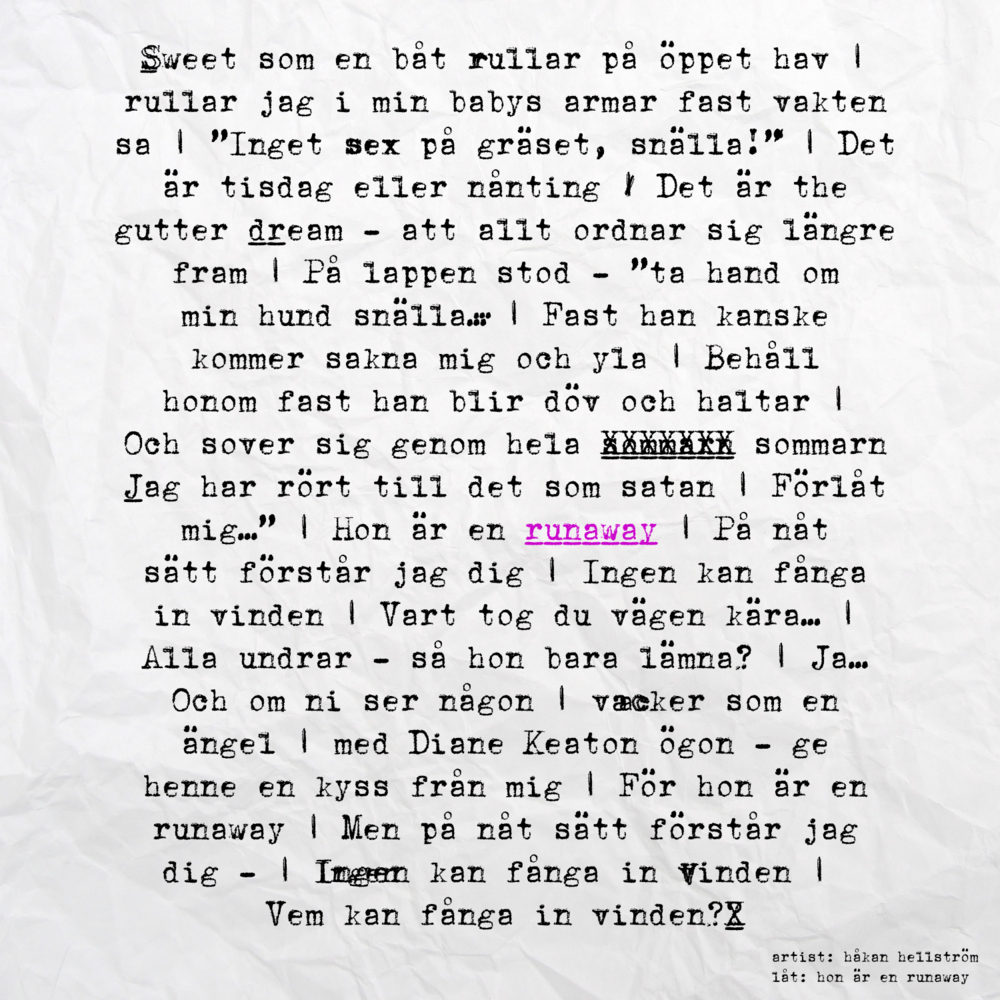
Håkan Hellström's "Hon är en runaway" isn't just a song; it's a bittersweet ode to a woman who defies capture, a spirit as untamable as the wind itself. The opening lines, a blend of youthful indiscretion and mundane authority ("Inget sex på gräset, snälla det är tisdag"), quickly give way to a deeper narrative of escape and regret. The note left behind, a plea to care for a beloved dog, hints at a past complicated by actions the runaway profoundly regrets. It's a snapshot of someone wrestling with the consequences of their choices, yet still choosing freedom, however painful. This contrast is the core tension of the song. The 'gutter dream' is the human condition. We dream of something better, yet still get trapped. The reference to Diane Keaton eyes only paints the picture of a fragile beauty.
Central to the song meaning is the repeated line, "Hon är en runaway / På nåt sätt förstår jag dig / Ingen kan fånga in vinden." This isn't mere repetition; it's an acknowledgment of a shared understanding between the singer and the runaway. It's a recognition that some souls are simply not meant to be contained, that the pursuit of freedom, even at a personal cost, is a valid and perhaps necessary path for some. The phrase "Ingen kan fånga in vinden" encapsulates this perfectly, serving as both a lament and a celebration of her unyielding spirit. The wind is a metaphor for all the things that can never be held down. The narrator understands her, as they are perhaps kindred spirits.
Ultimately, "Hon är en runaway" explores the complexities of empathy and acceptance. The narrator doesn't judge the runaway's choices; instead, he offers a kiss from afar and an understanding that transcends societal norms. The song doesn't offer a resolution or a neat explanation for her departure. It leaves us with the lingering question, "Vart tog du vägen, kära?" and the poignant realization that some questions may never have answers. The song's beauty lies in its acceptance of the unknown, its celebration of the uncontainable, and its quiet acknowledgment of the shared human desire for freedom, however messy and imperfect it may be. The last line, "Vem kan fånga in vinden?" shows that at the end of the day, there are some things that cannot be changed. We can only accept them.
 View Artist