Song Meaning
The lyrics paint a picture of youthful idealism clashing with the harsh realities of the world. Initially, the narrator meets someone with a privileged background, educated and seemingly destined for greatness, encouraged to "be bigger." This sets up an expectation of progress and positive change, a world where new laws could "unburden the subjugated." The narrator's own youthful ambition is sparked, wanting to be the first to "leave," but this desire is quickly met with the disorienting spectacle of marching armies, a scene where "no color seemed the best." This suggests a disillusionment with grand pronouncements and a confusion about which path to follow.
The central tension emerges between the desire to reach "beyond" and the fear of arriving "too late." The repeated refrain, "When you get beyond / You'll want to know," speaks to an inherent human drive for knowledge and experience, a yearning for something more. However, the conditional "And if you arrive too late" casts a shadow, implying that opportunities might be missed or that the pursuit itself could be futile if not undertaken with urgency. This creates a poignant sense of urgency and potential regret.
The most striking shift occurs in the final stanza, where the optimistic vision of the future is replaced by a stark, oppressive reality. "The future is darkness / And your friend is the oppressor." This is a brutal contrast to the earlier hopes of "new laws" and "unburdening." The narrator's plea, "Tell him very clearly / Until when..." is a direct challenge, a desperate attempt to find a limit or an end to this subjugation, but it's framed by the preceding despair. The lyrics suggest that the journey beyond is not necessarily one of enlightenment, but a confrontation with a bleak and controlled existence.
Ultimately, these lyrics resonate because they capture the universal feeling of striving for something greater while confronting the limitations and injustices of the present. The contrast between early hope and later despair, the yearning to "know" versus the threat of being "too late," and the final, stark image of oppression create a powerful emotional arc. The writing effectively uses the simple, repeated phrase "més enllà" (beyond) to encapsulate both the aspiration and the potential for disappointment, making the listener question the nature of progress and the cost of ambition.
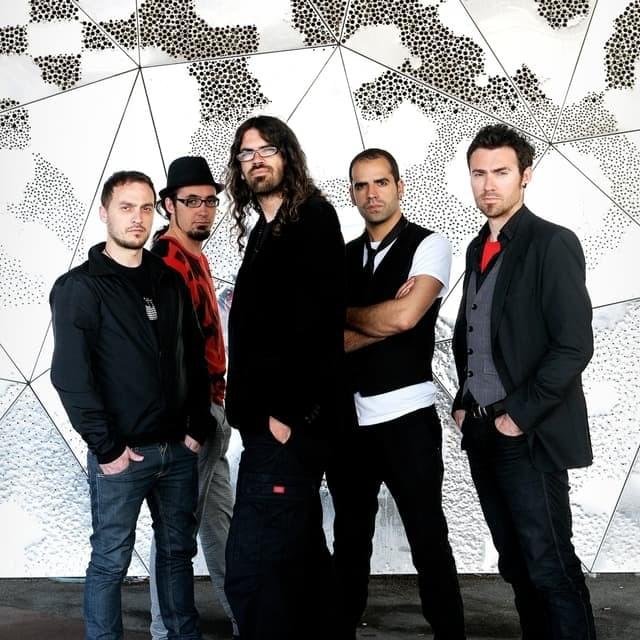
 View Artist