Song Meaning
Giorgos Mazonakis's "Kai na thes" (And Even If You Want To) is a raw, unflinching exploration of devotion that borders on obsession. The song's power lies in its stark simplicity: a declaration of unwavering commitment, even in the face of the beloved's own doubts and emotional turmoil. The opening lines, "Τι σε πιάνει και κλαις / Κάτι ώρες τρελές" (What's gotten into you, why do you cry / In these crazy hours), immediately throws us into the midst of a relationship fraught with anxiety and insecurity. The singer isn't offering solutions or platitudes; instead, he's establishing a baseline: *this* is the reality of their connection. His repeated reassurances are less about calming her fears and more about solidifying his own resolve.
The core of "Kai na thes" rests on the paradoxical promise of unyielding presence. "Και να θες, και να θες / Δεν σ' αλλάζω" (And even if you want to, and even if you want to / I won't change you) is both tender and slightly unnerving. He vows not to change her, but the following line, "Παν απαλά καρδιά μου σε βάζο" (I gently place my heart in a vase for you), hints at a desire to preserve and contain, rather than simply cherish. The vase becomes a metaphor for the relationship itself – beautiful, fragile, and potentially suffocating. This possessive quality becomes even more pronounced with "Και να θες, και να θες / Δεν σ' αφήνω" (And even if you want to, and even if you want to / I won't leave you). It's a promise, yes, but one delivered with a force that suggests a lack of agency on the part of the beloved.
Ultimately, "Kai na thes" presents a complex, perhaps even troubling, vision of love. It's a love defined by relentless commitment, a refusal to let go, even when the other person might desire distance. The final verse, "Κι αν μα έρθει η στιγμή / Που με δίωξης εσύ / Πουθενά δε θα έχω να πάω" (And if the moment comes / That you drive me away / I'll have nowhere to go), reveals the vulnerability beneath the bravado. His entire sense of self is intertwined with this relationship, making his devotion not just an act of love, but a desperate act of self-preservation. The song leaves us pondering the fine line between devotion and codependency, and the psychological weight of a love that refuses to yield.
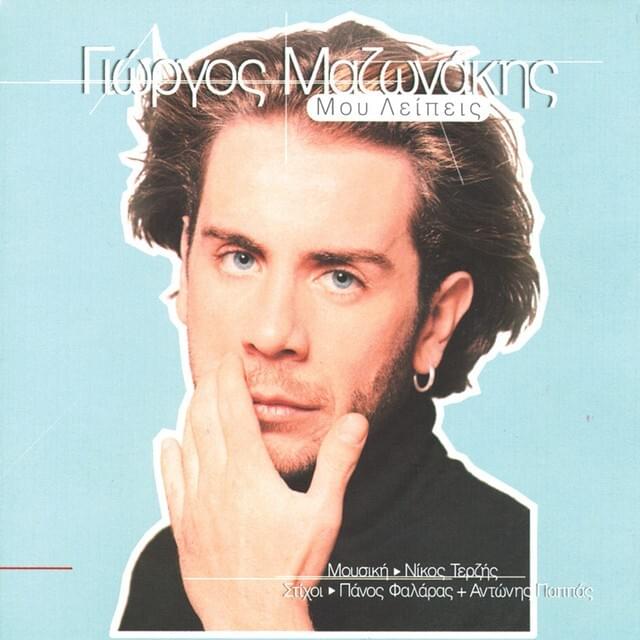
 View Artist