Song Meaning
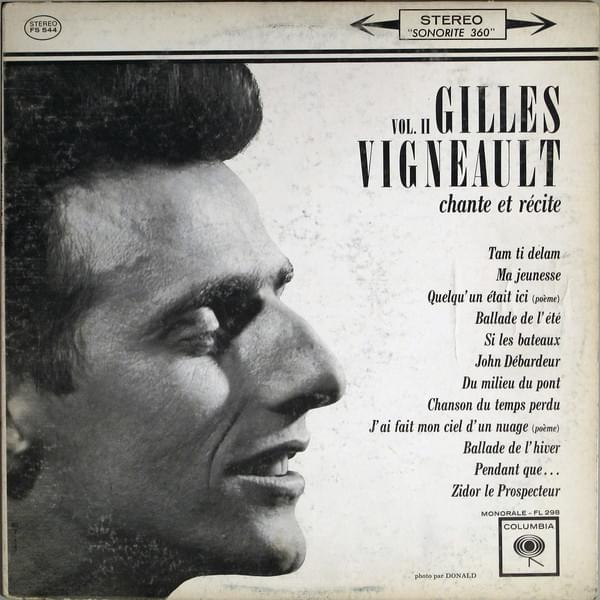
Gilles Vigneault’s "Ma jeunesse" isn't a straightforward lament for lost youth, but a delicate, almost spectral, exploration of its elusive nature. The song meaning hinges on the speaker's inability to grasp his own past, a past that seems to have slipped by unnoticed, leaving only a faint, unreliable echo. The opening lines establish this central tension: "Je n'ai pas fait tout mon chemin / Que déjà je tourne la tête" (I have not finished my journey / That already I turn my head). This immediately positions the listener within a reflective, almost regretful, state of mind. The speaker isn't necessarily sad, but rather puzzled by the ephemeral quality of his own lived experience. It's less a cry of anguish and more an intellectual quest.
The lyrics suggest a youth lived politely, almost passively, "pour ne déranger personne" (so as not to disturb anyone). This hints at a life perhaps defined by conformity or a reluctance to fully engage with the world. The "écho qui sonne / Au fond de la tête et qui ment" (echo that sounds / In the back of the head and that lies) is a potent symbol of memory's unreliability. It suggests that the past, as we reconstruct it, is often a fabrication, a story we tell ourselves that may not accurately reflect what truly transpired. Did the speaker and his youth travel together, "sans que je l'aie su" (without me knowing it)? This question encapsulates the song's central theme: the potential for a life to unfold almost imperceptibly, leaving one wondering if they were truly present.
Vigneault's use of imagery, particularly the seasons and the moon, adds another layer of complexity to the lyrics analysis. He claims to have "cueilli mes saisons / Sans en laisser échapper une" (picked my seasons / Without letting one escape), suggesting a deliberate attempt to savor life's experiences. Yet, this assertion is contradicted by his overall sense of disconnection. The "tribut de rime et de raison" (tribute of rhyme and reason) paid to the moon, representing art and intellect, further emphasizes the speaker's engagement with the world. Despite these efforts, youth remains elusive, a fleeting presence that he may have inadvertently allowed to pass him by: "L'aurai laissée passer devant / Je l'ai laissée passer devant" (I let her pass in front / I let her pass in front). The repetition amplifies the sense of missed opportunity, a quiet acknowledgement of a life perhaps not fully embraced.
 View Artist