Song Meaning
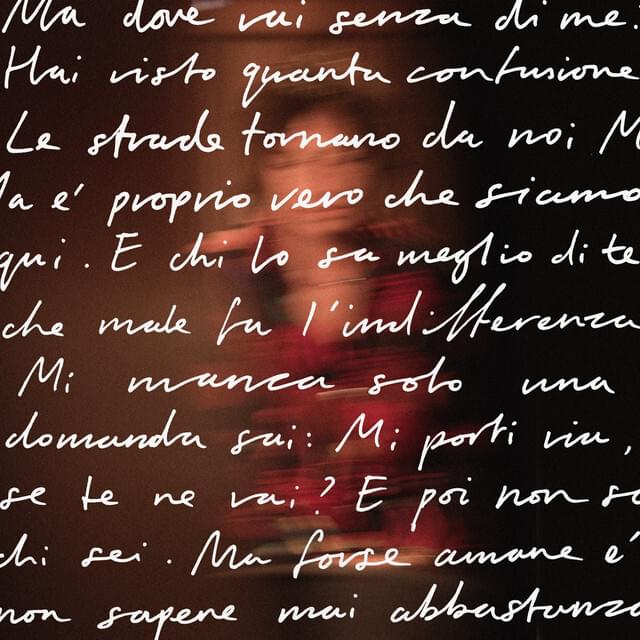
Gianna Nannini's "La differenza" isn't just a song; it's an intimate post-mortem of a relationship clinging to life support. The opening lines, "Ma dove vai senza di me? Hai visto quanta confusione?" immediately throws us into the throes of separation anxiety, a desperate plea against the backdrop of impending chaos. Nannini masterfully captures the push-and-pull dynamic, the agonizing question of whether staying or leaving inflicts more damage. It's a sentiment familiar to anyone who's ever felt the magnetic pull of a love that's simultaneously intoxicating and destructive. The reference to indifference ("Che male fa l'indifferenza?") highlights the paradoxical pain of being ignored, a particularly sharp sting after intimacy. Nannini lays bare the vulnerability of needing answers, confessing, "Mi manca solo una domanda, sai? Mi porti via se te ne vai."
The chorus is a revelation in understanding the song's meaning. "Amare è non sapere mai abbastanza," Nannini sings, acknowledging the inherent mystery within love, the frustrating inability to fully grasp another person. This acceptance of uncertainty becomes a twisted form of trust: "E ti credo un po' di più / Quando non mi parli più." Silence, in this context, speaks volumes, perhaps hinting at a deeper, unspoken truth that words can't convey. The line "In questo gioco, vince solo chi si arrende" drips with cynicism, suggesting a power struggle where vulnerability is mistaken for weakness. This isn't a celebration of love; it's an autopsy, dissecting its failures and contradictions.
Ultimately, "La differenza" hinges on the assertion of self amidst relational wreckage. The repeated declaration, "Ma tra noi due, la faccio io la differenza," isn't an arrogant boast but a declaration of independence. It's about reclaiming agency, drawing a line in the sand, and defining oneself outside the confines of the relationship. The final verses, tinged with longing ("Amore mio, sei tu / Ancora tu / Nei giorni lenti, io ti porto via nei sogni"), reveal the lingering attachment, the ghost of what once was. Yet, even in these moments of vulnerability, the singer refuses to utter certain words again, a final act of self-preservation. Nannini's song is a powerful exploration of love's complexities, the pain of separation, and the difficult but necessary act of self-discovery.
 View Artist