Song Meaning
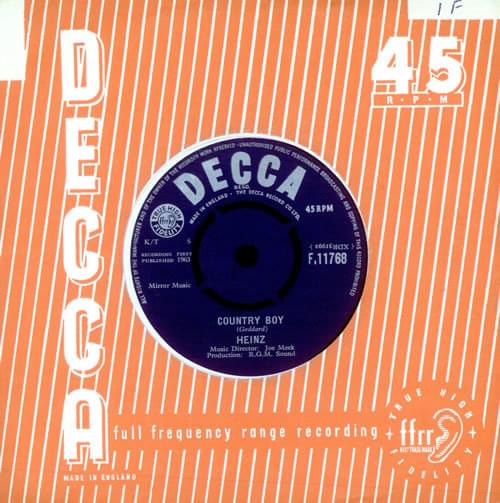
Heinz's "Country Boy" isn't some sophisticated lyrical labyrinth; its power lies in its disarming simplicity. The song meaning hinges on the raw, almost childlike earnestness of its proposition. Stripped bare of pretense, it’s a direct appeal, a suitor's plea delivered not from a gilded tower, but 'down by the river.' The repeated invitation to 'come, come' feels both urgent and vulnerable, like a whispered promise hanging in the humid air.
The genius of "Country Boy" resides in the juxtaposition of aspiration and humility. The singer freely admits his lack of material wealth ('I ain't got a penny'), immediately pivoting to assert the immeasurable value of his affection ('country boy's lovin' is as good as any'). This isn’t just romantic bravado; it’s a declaration of emotional wealth, a subtle dig at those who equate worth with capital. The 'sweet country boy love' he offers becomes a currency of its own, promising something genuine and untainted by the corrupting influence of money.
However, beneath the surface of rustic charm, a hint of desperation simmers. The repeated assurances and the slightly frantic, almost pleading interjections ('Don't tease me, come on now,' 'You told me earlier you'd come over') suggest an insecurity lurking within the 'country boy' persona. It raises the question: Is this pure, unadulterated affection, or a performance masking a deeper need for validation? The final, almost mumbled apology ('I'm sorry, excuse the dreams') hints at an overwhelming yearning, painting a portrait of someone caught between idyllic fantasy and the stark reality of unrequited desire. In the end, "Country Boy" becomes a study in the complexities of love, proving that even the simplest declarations can hold layers of emotional truth.
 View Artist