Song Meaning
The lyrics paint a stark picture of a deeply troubled internal landscape, presented as a "broken house." This isn't just a metaphor for emotional distress; it's a literal, haunting space where "bloody handprints on the wall" and "ghosts out in the hall" signify past trauma and lingering guilt. The narrator's "mamma" inhabits this space, her spectral voice a constant echo of regret and apology, specifically for hurting the narrator. This suggests a cycle of pain, where the mother's own struggles and perhaps destructive tendencies have directly impacted the speaker.
The central tension arises from the narrator's own mirroring of this destructive pattern. He identifies himself as a "broken man" with "blood on my hands," acknowledging a similar tendency to "offer the worst in me" – "all my hate, all my anger, all my self-loathing." The ghosts in his hall are not just his mother's; they are his own internal demons, the manifestations of his own self-destructive impulses. The struggle is to "ignore them all," yet the persistent "still hear them" reveals the impossibility of escaping this inherited or learned pain.
The most striking aspect is the narrator's desperate plea for change, juxtaposed with the overwhelming presence of past hurt. The mother's spectral apology, "I didn't mean to hurt you," is met with the narrator's own internal chorus of negativity. Yet, a flicker of hope emerges with the declaration, "You can't go wrong if you bring love." This is the turning point; the narrator recognizes that breaking the cycle requires an active choice to cultivate something positive, a stark contrast to the "hate" and "anger" he admits to embodying. The final lines, "Time to fly, time to fight, time to be a better man," are a resolute, albeit fragile, commitment to transcending the "broken house" and its spectral inhabitants.
This writing is effective because it grounds abstract emotional pain in visceral, almost gothic imagery. The "broken house" and "ghosts" aren't just figures of speech; they are tangible elements of the narrator's reality, making his struggle feel immediate and inescapable. The repetition of "ghosts out in the hall" and the narrator's own admission of being a "broken man" emphasize the cyclical nature of his pain. Ultimately, the lyrics resonate because they capture the profound difficulty of self-redemption when haunted by the past, while still offering a powerful, hard-won resolve to break free.
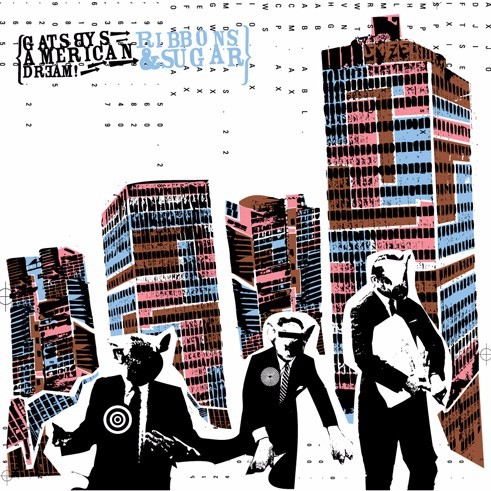
 View Artist