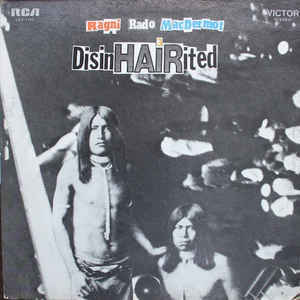
Song Meaning
The scene opens with a tense, almost administrative exchange between McNamara and Berger, establishing a power dynamic that quickly becomes unsettling. McNamara's initial pleasantries like "We've become well-acquainted" and "Good friends" are undercut by his sharp, almost accusatory questions: "Are you hopeless?" and "We've tried." Berger's responses, initially agreeable ("Good friends," "Thank you"), shift to a more defiant and self-aware tone, especially when he declares, "I haven't" to McNamara's "We've tried."
The core tension arises from a perceived mismatch between Berger's identity or actions and the expectations of his role, likely as a student or employee. McNamara's pronouncements, "We do not send our chemistry teachers on trips" and "Your hair, your dress," suggest a judgment based on appearance or behavior that deviates from norms. Berger's cryptic reply, "I am, or less," hints at a struggle with identity or conformity, while his plea to be called "Dr. Frankenstein" and McNamara's reaction, "The last monstrous straw," frame Berger as an outsider whose perceived transgressions are seen as inherently "monstrous" by the institution.
The most striking element is Berger's defiant assertion, "This is 1970, not 1969." This line, seemingly out of place, injects a specific historical context that suggests a clash between progressive societal shifts and rigid institutional policies. It implies that Berger's "monstrous" behavior or identity, whatever it may be, is a product of changing times that McNamara's institution is not equipped to handle. The contrast between the sterile, formal "de-matriculate in the front office" and Berger's parting "So long love!" underscores his rejection of McNamara's world.
These lyrics are effective because they build a miniature drama of judgment and rebellion through sharp dialogue and loaded implications. The ambiguity of Berger's "crime"—whether it's related to his appearance, his perceived hopelessness, or his defiance of norms—makes the power struggle more potent. The final exchange, particularly Berger's repeated, almost taunting farewell, leaves the listener with a sense of unresolved conflict and Berger's determined, if ostracized, individuality.