Song Meaning
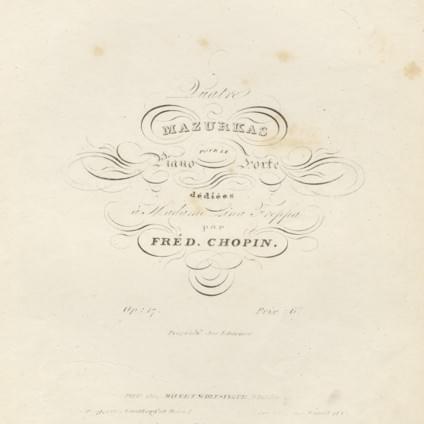
This piece, a Mazurka in B-flat major, Op. 17, No. 1, is entirely instrumental. Without lyrics, the emotional landscape is painted solely through melody, harmony, rhythm, and dynamics. The absence of words invites listeners to project their own narratives and feelings onto the music. It's a blank canvas for the soul, where the composer's intent is conveyed through the pure language of sound.
The structure of a mazurka, a Polish folk dance, often implies a certain elegance and perhaps a touch of melancholy or wistfulness, even in a major key. The specific key of B-flat major typically lends a warm, rich, and sometimes noble character to the music. Listeners might perceive a sense of gentle movement, like a graceful dance, or perhaps a more introspective mood depending on the nuances of the performance.
The effectiveness of instrumental music lies in its ability to bypass direct linguistic meaning and tap into more primal emotional centers. The interplay of musical phrases, the rise and fall of melodic lines, and the rhythmic pulse all contribute to a subjective experience. The composer uses these elements to evoke a feeling or a series of feelings, leaving the precise 'story' open to interpretation by each individual listener.
Ultimately, the impact of this Mazurka stems from its purely musical expression. It offers a space for reflection, joy, or contemplation, shaped by the listener's own internal world interacting with the composer's sonic architecture. The lack of words is not a deficit but an invitation to a deeply personal engagement with the art form.
 View Artist