Song Meaning
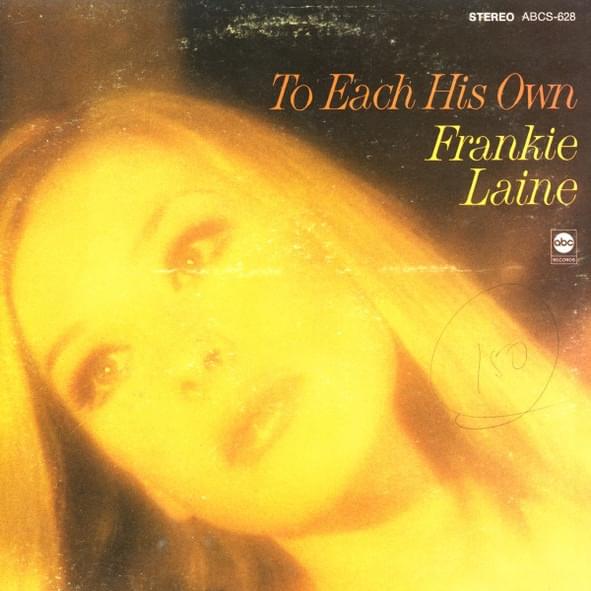
Frankie Laine's "To Each His Own" isn't just a sentimental ballad; it's a concise articulation of emotional dependency, framed within the post-war era's yearning for stability. The song's core idea centers on the inherent incompleteness of the individual. Laine croons about needing 'sun and rain' for a rose to bloom, immediately establishing a metaphor for personal growth requiring external forces, specifically, the presence of a significant other. The refrain, "To each his own, and my own is you," moves beyond simple romantic devotion and hints at a deeper, almost existential reliance. The narrator isn't merely choosing a partner; he's acknowledging a fundamental need for connection to achieve wholeness.
The lyrics cleverly use commonplace imagery – songs needing words, dreams needing companionship – to build a cumulative argument for interdependence. There's a subtle anxiety woven into the seemingly straightforward declaration of love. The lines "What good is a song if the words just don't belong?" and "a dream must be a dream for two" suggest a fear of meaninglessness without shared experience. The chorus amplifies this vulnerability. The singer’s plea, "I need you, I know, I can't let you go," isn't just romantic fervor, but a near-desperate clinging to the very source of his emotional fulfillment.
Ultimately, "To Each His Own" resonates because it taps into a universal human desire for belonging and completion. While the melody and Laine's delivery are undeniably smooth and comforting, the underlying message acknowledges a perhaps uncomfortable truth: that our individual identities are often inextricably linked to the relationships we cultivate. The song's meaning lies not just in the declaration of love, but in the quiet admission of need, a sentiment that continues to strike a chord across generations.
 View Artist