Song Meaning
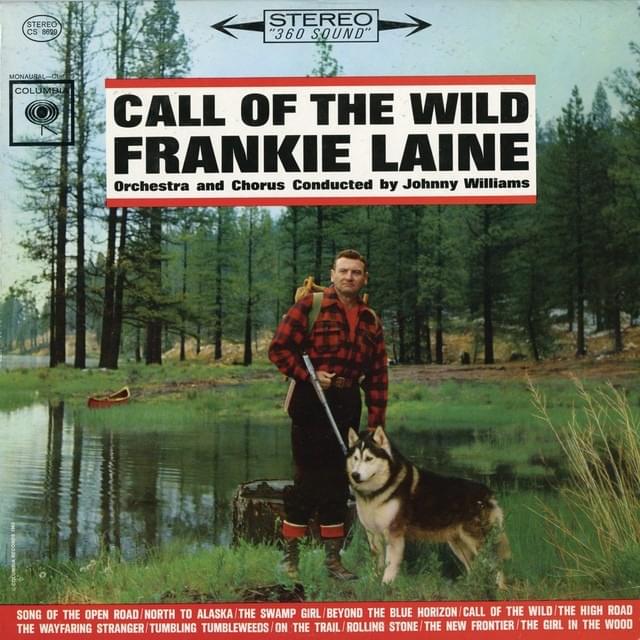
Frankie Laine's "Call of the Wild" isn't just a song; it's a primal scream against domesticity, a rugged individualist's anthem scored for a bygone era. The song meaning centers on an almost pathological aversion to commitment, masked as a romantic embrace of freedom. He’s the archetypal rambling man, a figure deeply embedded in the American psyche, yet Laine’s take carries a darker undercurrent. The lyrics paint a picture of a man driven by an insatiable wanderlust, a 'restless heart' forever yearning for the 'wide open spaces.' But it's not merely wanderlust; it's a flight from something, a desperate attempt to outrun 'memories' that 'haunt' and 'torture' his 'wild savage soul.' The repeated insistence on the 'call of the wild' feels less like a joyful embrace of nature and more like a compulsion, a force he 'must obey.'
Laine's character reveals a fascinating, if unsettling, internal conflict. He acknowledges the allure of domestic bliss – 'Your kisses are sweet' – but immediately rejects it, declaring that 'no woman can tame me.' This isn't presented as a matter of choice, but as an immutable aspect of his being. He's 'born to be happy but born to be free,' as if happiness and freedom are mutually exclusive. The song hints at a deeper psychological wound, a fear of intimacy or perhaps a past trauma that has rendered him incapable of forming lasting attachments. The 'call of the wild' becomes a convenient excuse, a romanticized justification for his inability to connect. The lyrics imply that this 'call' isn't just an external force but an internal one, something that 'bring[s] out the beast' within him.
Ultimately, "Call of the Wild" is a portrait of a man trapped by his own self-imposed exile. He's a prisoner of his own romantic ideal, forever chasing a freedom that may ultimately be unattainable. The song's power lies in its unflinching portrayal of this internal struggle, the tension between the desire for connection and the fear of commitment. It's a uniquely American paradox, the celebration of individualism taken to its most extreme and isolating conclusion. It's a song that lingers long after the last note fades, prompting us to question the true cost of freedom and the nature of the 'wild' that resides within us all.
 View Artist