Song Meaning
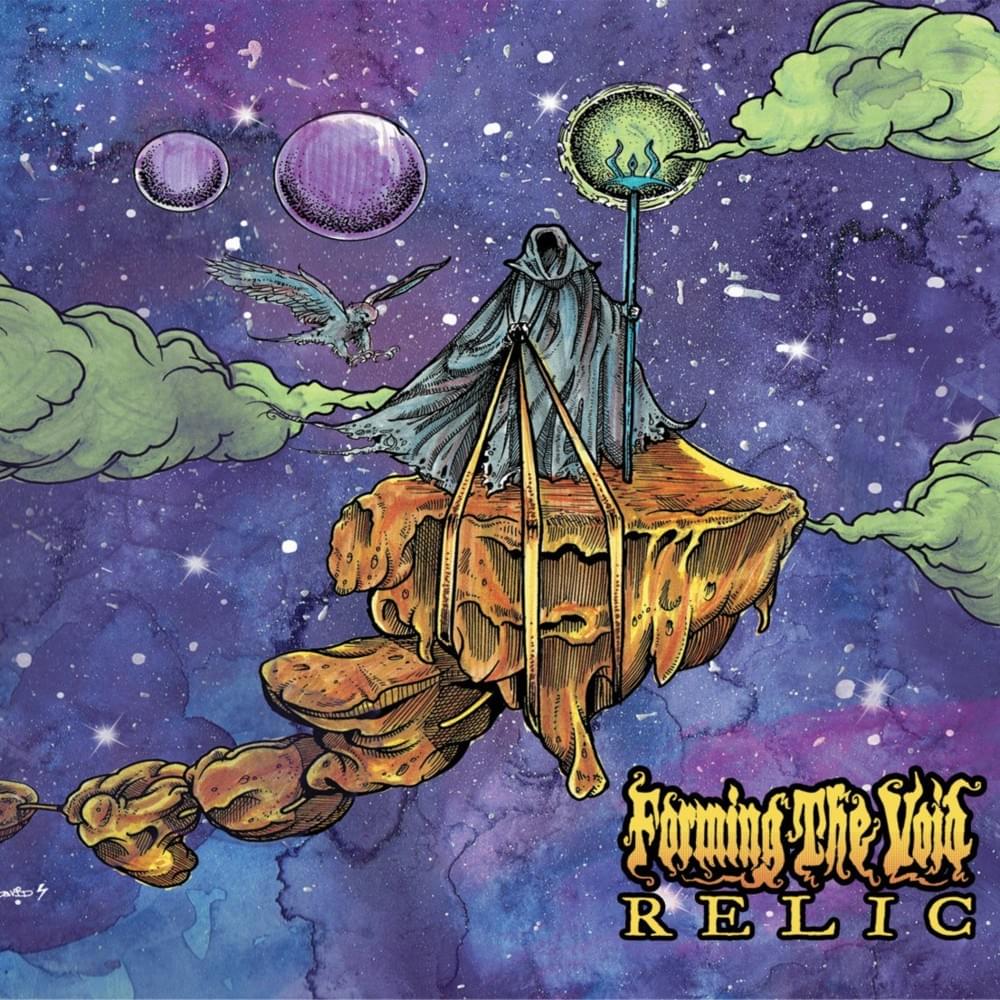
The lyrics paint a picture of something returning from a distant, almost otherworldly place, described as "back from beyond" and "behind the sky." There's a sense of vastness and mystery, with imagery of an "endless road" and a creature or entity called the "Goldhorn" taking flight. The dominant feeling is one of awe and perhaps a touch of foreboding, as the world is presented as a watchful "eye" observing these grand, almost cosmic events.
The central tension seems to revolve around the ephemeral nature of existence versus a sense of the divine or eternal. "Plumes in the sky" and "rising smoke" suggest transient phenomena, yet these are "held divine," implying a sacredness in fleeting moments or signs. The contrast between the stable "shining stone" and the ever-present, unresolvable movement of "the dust" highlights this conflict between permanence and change.
The most striking element is the recurring phrase "This world is the eye," which imbues the entire scene with a sense of being observed or judged. It transforms the landscape from a passive backdrop into an active, sentient witness to the "plumes" and the "Goldhorn." This perspective shift makes the external events feel intensely personal and significant, as if the very fabric of reality is taking notice.
Ultimately, the lyrics resonate because they tap into a primal sense of wonder about the unknown and our place within it. The deliberate ambiguity of the imagery, from the "Goldhorn" to the "plumes," invites personal interpretation, allowing listeners to project their own feelings of awe, mystery, or even anxiety onto the unfolding cosmic drama. The repeated, almost mantra-like structure of "Plumes in the sky / This world is the eye" reinforces the feeling of an inescapable, profound observation.
 View Artist