Song Meaning
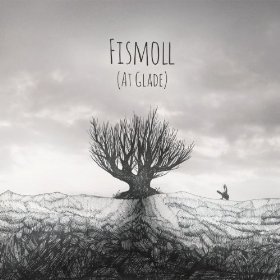
The lyrics paint a picture of unrequited or misunderstood love, framed by stark natural imagery. The repeated "Look at this" commands draw attention to a series of observations, starting with a "sad without leaves" tree, then a "girl, her curly beautiful hair." The narrator immediately contrasts this beauty with a man who "loves her only with hands," suggesting a superficial or purely physical connection. This sets up a melancholic tone, where even the tree seems to empathize with the man's unfulfilled affection, "crying over him."
The central tension arises from the narrator's own feelings and perceived inadequacy. The collective "thousands of us" are described as "feeble like glass," highlighting a shared vulnerability and perhaps a sense of being overlooked or easily broken. The narrator explicitly identifies with the tree, "I'm like this tree," suggesting a shared state of silent suffering and rootedness in unrequited emotion. The girl, meanwhile, is elevated to an almost ethereal status, a "million of butterflies" and "the light to my eyes," yet the narrator’s eyes are "blind," indicating an inability to truly connect or be seen by her.
The most striking craft element is the shifting perspective on the man's love. Initially, he "loves her only with hands," a physical, perhaps crude, affection. This is later revised to "he loves her, only in her head," a crucial detail that implies the man's love is either imagined by the girl or exists solely within her internal world, not as a reciprocated feeling. This subtle but significant alteration reframes the entire dynamic, suggesting the man might be as lost or disconnected as the narrator, or that the girl is living in a fantasy. The repetition of "crying" – first the tree over him, then the tree with him – further blurs the lines of who is suffering and why.
These lyrics resonate because they capture the quiet desperation of loving someone who is unattainable or perhaps doesn't even perceive the love being offered. The simple, declarative "Look at this" structure grounds the abstract emotions in tangible, albeit melancholic, images. The contrast between the fragile "us" and the vibrant "butterflies" emphasizes a feeling of being small and insignificant in the face of overwhelming beauty or desire. The final lines, with the "blind eyes" unable to fully appreciate the "light," perfectly encapsulate the painful paradox of being close to something beautiful yet unable to truly see or be seen by it.
 View Artist