Song Meaning
The narrator confronts a partner who seems to operate with a simplistic, perhaps male-centric, worldview, failing to grasp the complexities of their shared reality and the narrator's own identity. The lyrics highlight a fundamental disconnect, where the partner overlooks the narrator's experiences, symbolized by the "gonna" (skirt) and "pantaloni" (trousers), suggesting a failure to see beyond conventional roles or assumptions. This leads to a frustration that the partner's "vizio" (vice) threatens the narrator's "serenità" (serenity) and "felicità" (happiness), implying a selfish pursuit that disregards the consequences for others.
The central tension arises from the partner's apparent inability to comprehend that love is "divisibile a metà" (divisible in half) and that their actions have repercussions. The repeated phrase "pensi come un uomo / Come un uomo normale" (you think like a man / like a normal man) suggests a critique of a rigid, possibly entitled, mindset that overlooks shared responsibilities and the right to happiness for all. The narrator feels their own peace is being destroyed by the partner's self-serving behavior, creating a palpable sense of conflict.
The lyrics employ a striking contrast between the partner's perceived normalcy and the narrator's deeper understanding of their situation. The partner dismisses the conflict as "solo una canzone" (just a song), trivializing the narrator's feelings. Yet, the narrator insists on the gravity of the situation, pointing out the partner's "responsabilità" (responsibilities) and their destructive path to "felicità" (happiness). The repeated promise that "domani sarà… tutto uguale…" (tomorrow will be... all the same...) initially carries a tone of resigned disappointment, but it shifts dramatically at the end.
This shift is where the true power of the lyrics lies. The final declaration that "domani sarà… sarà migliore / Sarà migliore dopo questa canzone… sarà migliore" (tomorrow will be... will be better / Will be better after this song... will be better) transforms the song from a lament into an act of catharsis and empowerment. It suggests that articulating these grievances, perhaps through the very act of singing this song, is the catalyst for change, offering a hopeful, albeit hard-won, vision of a better future.
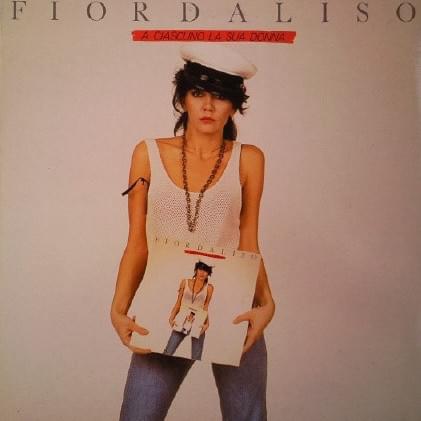
 View Artist