Song Meaning
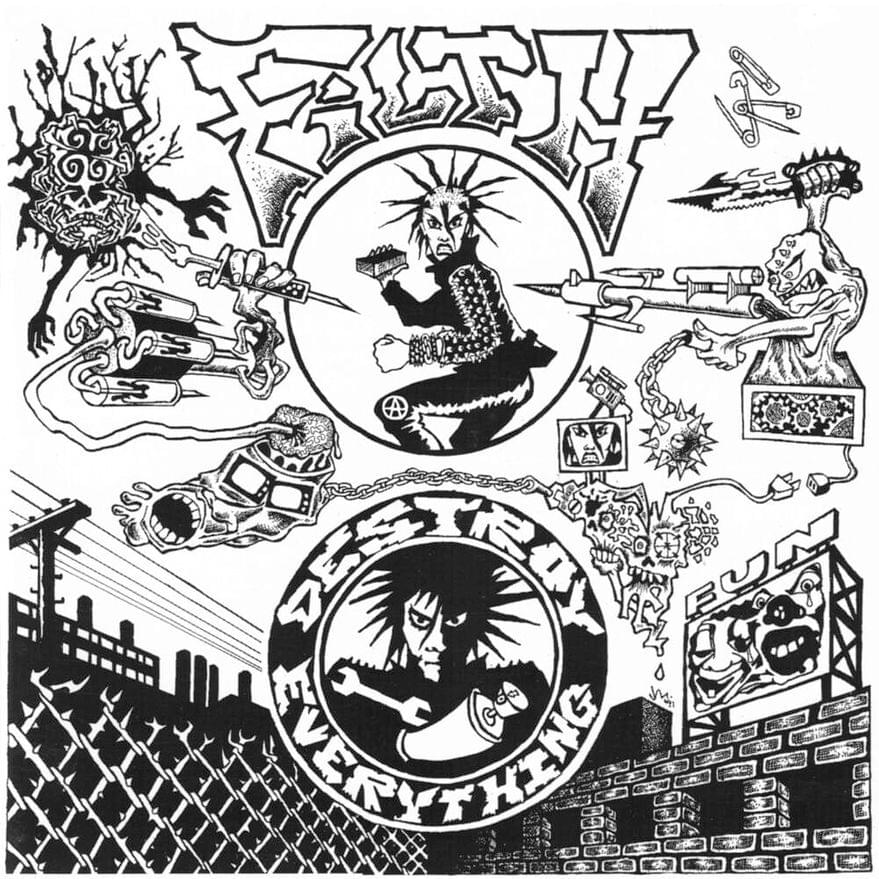
The narrator positions themselves within a scene of decay, embracing the "filth" and the physical markers of addiction like a "needle hanging from my vein." This self-identification with degradation is met with external judgment, a "disgust" the narrator perceives in others. Yet, this external reaction is twisted into a source of pride, as the narrator declares, "I love what I have become," suggesting a profound rejection of societal norms and values.
The core tension arises from the narrator's perceived power, which seems to stem from their embrace of societal rejection. They claim dominion over others' emotions, stating, "I own your emotions / I can make you love / I can make you fucking hate." This assertion of control is juxtaposed with their own experience of rejection, which transforms their own "happiness turns to hate." The lyrics suggest a feedback loop where societal scorn fuels a defiant, almost predatory, sense of self-empowerment.
The most striking aspect is the narrator's transformation of their own suffering into a weapon. The repeated declaration "I own you" becomes a mantra of control, especially when paired with the idea of a "drug that I use with mindless devotion / To your empty intelligence." This suggests the narrator's perceived power isn't just internal but is actively projected onto and derived from the perceived failings of others. The final lines, "You are within me / We are one," indicate a disturbing fusion, where the narrator absorbs their perceived oppressors or targets, making the boundary between self and other collapse into a unified, albeit dark, whole.
This lyrical construction is effective because it weaponizes vulnerability and transforms societal alienation into a source of perverse strength. The narrator doesn't just inhabit the "filth"; they weaponize the disgust it elicits, turning it into a claim of ownership over the very people who judge them. The raw, confrontational language and the escalating declarations of power create a visceral portrait of someone who has found a dark form of liberation in embracing their own perceived monstrosity.
 View Artist