Song Meaning
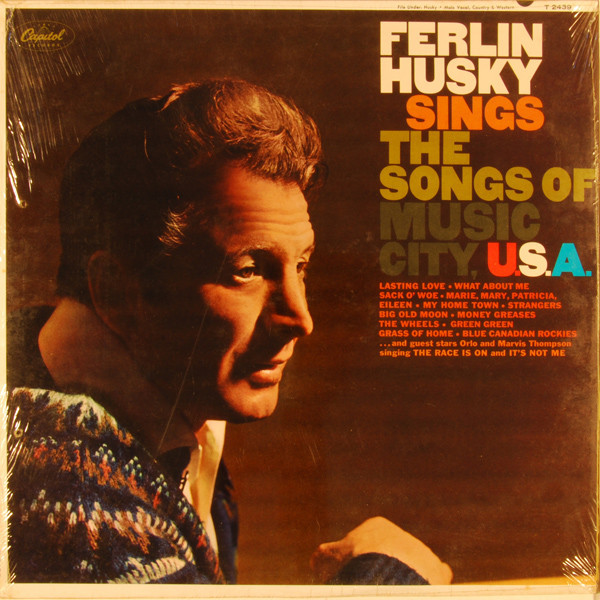
Ferlin Husky’s "Blue Canadian Rockies" isn’t just a postcard; it's sonic homesickness distilled into a waltz. The immediate read is simple: a longing for a specific place and person, amplified by distance. But the emotional geography here is richer than just pining. The titular Rockies aren't merely scenery; they're a stand-in for a lost self, a former identity inextricably linked to both nature and romance. The 'spring sighing through the trees' and 'golden pupies blooming' aren't generic pastoral images, but rather triggers, sonic and visual cues that unlock a flood of intensely personal memories. He's not just missing a place; he's missing who he *was* in that place.
The repetition of 'Across the sea they call me' underscores the feeling of being trapped, maybe even exiled. The 'call' isn't necessarily a welcome invitation, but rather a constant, nagging reminder of his present, disconnected reality. The use of 'blue' is crucial, operating on multiple levels. There's the literal 'Blue Canadian Rockies,' a geographical marker. But there's also the emotional 'I'm so lonesome and so blue,' a direct admission of sadness. Husky cleverly conflates place and feeling, making them inseparable. The geographical 'blue' becomes a metaphor for his internal state.
Ultimately, the song's power lies in its unadorned simplicity. It bypasses complex narratives and focuses on the core emotion of yearning. The somewhat truncated lyrics, leaving the story incomplete, actually amplify the sense of loss. We don't know *why* he's across the sea, what caused the separation. This ambiguity allows the listener to project their own experiences of longing and displacement onto the song, transforming "Blue Canadian Rockies" from a simple country tune into a universal expression of the ache for home.
 View Artist