Song Meaning
The lyrics open with a disorienting, repetitive questioning: "そうだ、これか そうか、これだ" (Is this it? Oh, this is it.) followed by "そうだ、これか そうか、どれだ" (Is this it? Oh, which one is it?). This immediately establishes a sense of confusion and a struggle to grasp reality or a definitive state. The narrator's mind feels overwhelmed, leading to physical distress: "あー頭ががんがんする" (Ah, my head is pounding) and a desire to shut out the world, "何にも聞きたくない" (I don't want to hear anything). This intense internal chaos is punctuated by visceral reactions like "反吐が出る" (I want to throw up) and a defiant rejection of external pressures, "馬鹿にしてんの? 従えないよ?" (Are you kidding me? I can't obey?). The overwhelming noise is emphasized with a desperate repetition: "うるさいうるさいうるさいうるさい...." (Noisy, noisy, noisy, noisy....).
The lyrics then pivot to a critique of superficial positivity, suggesting that only focusing on the pleasant is ultimately boring: "綺麗な事だけじゃ ほらねみたろ?つまらない" (Just pretty things, see? Boring). This perceived artificiality has warped the narrator's perception of the world, making it feel "おかしくなったこの世界" (this world has gone crazy). The result is a descent into self-destructive coping mechanisms, described as "飲み倒れ" (drinking oneself to death) and feeling like "ゴミ同然" (like garbage). The narrator acknowledges a failure to become the idealized "聖人君子" (saintly person), finding solace only in "憂さ晴らし" (venting frustration).
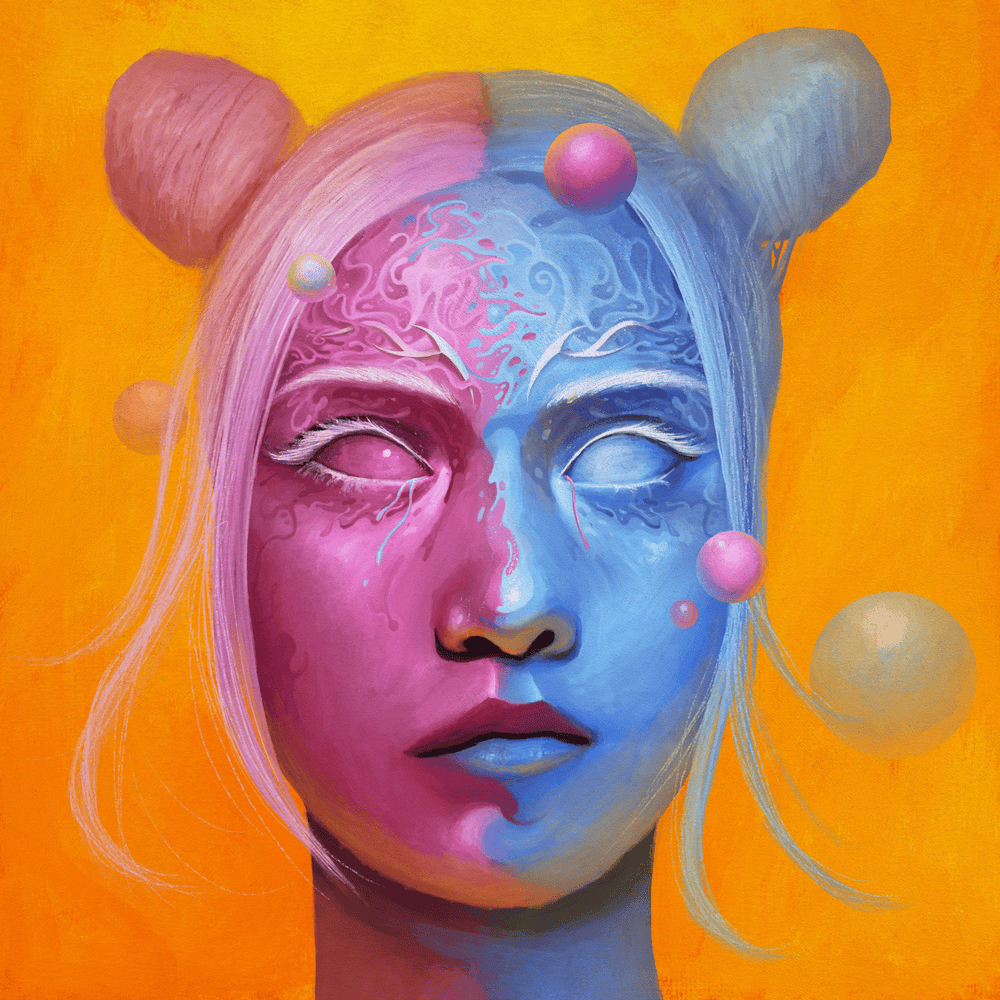
A striking shift occurs with the introduction of a saccharine, almost mocking tone, as if mimicking social media interactions: "なにそれちょーいいね" (What's that, so cool) and "あんたやっぱり まじさいこー" (You're the best, seriously). This is followed by a plea for connection, "一生側にいてね?" (Stay by my side forever?), which is immediately met with a dismissive "え?なに?ごめん 聞こえなーい" (Huh? What? Sorry, I can't hear you). The laughter that follows, "キャハハハハ," feels hollow and detached, highlighting a profound disconnect. The juxtaposition of this superficial positivity with the earlier distress creates a sharp, unsettling contrast, suggesting a performative aspect to social interaction that masks deeper turmoil.
The lyrics delve into a complex emotional landscape, touching on themes of self-perception, societal pressure, and the struggle for authenticity. Phrases like "カミカガリ イトオカシ" (God's possession, strange) and "アタマカカエ サケビタイ" (Want to trade heads and scream) express a desire for escape or transformation. The internal conflict is palpable in lines like "トマリタイ トマレナイ" (Want to stop, can't stop) and the inability to disconnect: "ハナレバナレ ニナレナイ" (Can't become separated). The English interjection, "I'm losing my shit," directly states the breakdown of control, amplified by the recurring, disembodied laughter. The repeated chorus of "マジ・笑・誰・それ・超・カワ" (Seriously, laugh, who, that, super cute) and the wish for everything to disappear like bubbles ("泡(シャボン)みたく全部白く 飛んで消えてなくなれぇ♡" - Like bubbles, let it all turn white, fly away and disappear) reveal a desperate longing for oblivion or a reset, a stark contrast to the seemingly upbeat, almost manic energy of the chorus itself.
The latter half of the song introduces a more direct confrontation with destructive relationships and self-awareness. The narrator questions the purpose of their actions: "ダレノタメニ ウゴキタイ?" (For whom do I want to move?). The English section, particularly "Wtf is the matter with u / Spending the shittiest time on ur phone / Painting hate, hate, hate / All over the net," points to external negativity and its impact. The narrator's own self-deprecation, "Saddest, dumbest chick in the hood / Yeah, that's me / Damn / I'm too fxxxxd up," is raw and unflinching. The concept of "共依存" (codependency) is explicitly named, alongside the realization that "そこに愛はない" (there is no love there). The narrator identifies as an "エナジーバンパイア" (energy vampire), acknowledging their own draining effect on others, a painful self-recognition that fuels the ongoing cycle of distress and confusion.