Song Meaning
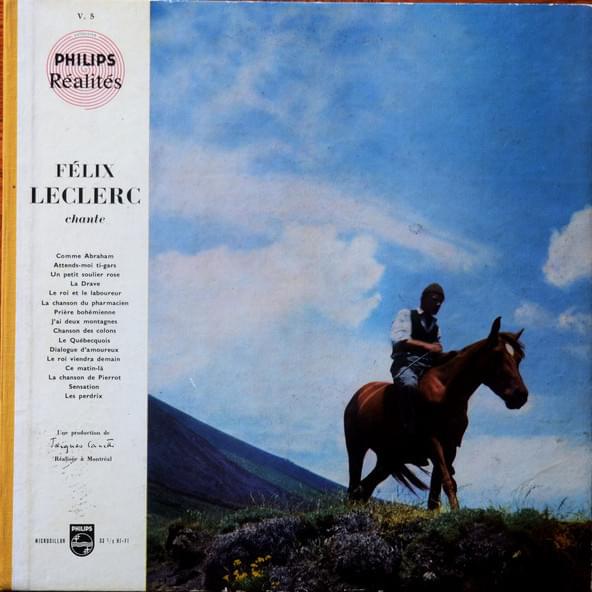
These lyrics paint a stark picture of a colonist's life, immediately establishing a deep conflict between the desire for freedom and the crushing weight of their circumstances. The speaker longs to "voler dans l'horizon," to escape, but their home is described as a "sac de pierre," literally "rivée aux talons"—riveted to their heels. This isn't a home of comfort, but a physical anchor, a burden that keeps them rooted to a harsh reality.
The central tension here is one of profound deprivation, both intellectual and emotional. The repeated, almost mournful declarations – "Y a pas d'papier chez les colons / Y a pas d'moitié chez les colons" – highlight a stark absence of both creative outlet and companionship. The lyrics suggest a life where even basic human needs for expression and connection are unmet, leaving the speaker "en peine d'écrire / Et j'serais en peine d'aimer." This isn't just physical hardship; it's a spiritual barrenness.
The craft here excels in grounding abstract longing in visceral imagery. The idea of life being "roule sur des houles de pays," tossed across waves of land, evokes a profound sense of displacement and lack of agency. The elusive "paradis qu'on dit / Est derrière l'abattis" — a paradise always just beyond reach, behind a clearing or barrier — perfectly captures the Sisyphean nature of their struggle. They "travaillent comme des bœufs," yet find only "deux étoiles dans les cieux" at night, emphasizing their isolation and the vast, indifferent landscape.
What makes these lyrics so effective is their progression from individual yearning to a collective, almost ancestral burden. The final stanza, with its chant-like rhythm, "Coli Colo colonisons / Pour tous les fistons qui viendront," transforms personal suffering into a grim, determined legacy. It's a rallying cry that acknowledges the immense cost – "pas d'moisson / Sans sueur des fronts et sans colons" – suggesting that this brutal, sweat-soaked existence is not just their fate, but a necessary sacrifice for future generations. It's a powerful, unsettling conclusion that leaves the listener contemplating the true price of progress and belonging.
 View Artist