Song Meaning
The lyrics paint a stark picture of individuals deliberately isolating themselves, seeking refuge from external judgment and attention. These "lonely ones" exist in shadows, places "where the spotlight never shone," suggesting a conscious withdrawal from a world they perceive as intrusive or unaccepting. The narrator then describes a process of feeding these individuals "their dreams" through digital interfaces, "between the lines upon the screens," hinting at a mediated or artificial form of connection.
The core tension arises from the contrast between outward isolation and the internal, perhaps manufactured, fulfillment offered by technology. The repeated phrases like "lonely boy in a lonely home" and "broken boy, in a broken home" emphasize a pervasive sense of solitude and damage. Yet, the crucial insight is the assertion that "He's the lonely one, not the only one," and similarly for the "broken girl," suggesting a shared, albeit hidden, experience of these conditions. This reframes individual suffering as a collective, unspoken reality.
The most striking aspect of the craft is the deliberate, almost clinical, repetition that builds a sense of overwhelming sameness and entrapment. The parallel structure of "lonely boy... lonely home... lonely one" and "broken boy... broken home... broken one" creates a hypnotic rhythm, mirroring the cyclical nature of their isolation. The introduction of "broken girl, living in a broken world" expands this pattern, implying that the societal context itself is fractured, contributing to the individual's state.
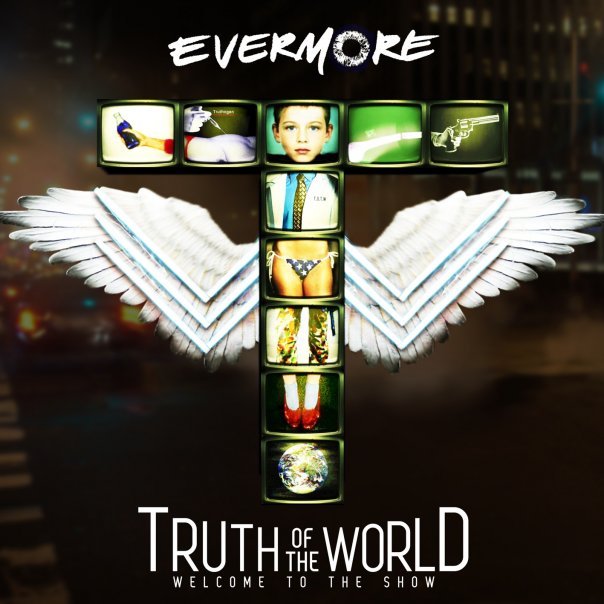
Ultimately, these lyrics resonate because they articulate a quiet despair and the subtle ways we attempt to cope with it. The "lonely ones" and "broken ones" are not just individuals but archetypes, tuning into a "Truth of the World" that is delivered through screens, a truth that seems to validate their hidden existence. It's a poignant commentary on modern alienation and the digital echo chamber that can both reflect and amplify our deepest feelings of solitude.
 View Artist