Song Meaning
{"song_id": 10449069, "meaning": "Erin McKeown's \"How To Be A Lady\" isn't a tutorial; it's a barbed critique disguised as one. The song meaning unfurls as a set of instructions, dripping with irony, on how to perform conventional femininity. McKeown doesn't celebrate these behaviors; she dissects them, revealing the inherent contradictions and performative aspects of gender roles. The opening lines, \"So, if you want to be a lady / Well then, have a look at me,\" immediately establish a tone of knowing detachment. She presents herself as an example, but one senses a subversive agenda beneath the surface. The seemingly simple advice carries a weight of societal expectation and constraint.
The lyrics paint a picture of a woman hyper-aware of her presentation. Instructions like \"Paint your lips a touch too wide\" and \"Hide secrets in your mouth\" suggest a calculated performance, a conscious manipulation of appearance to meet external demands. The lines about \"hanging your purse on your left\" and positioning \"your lover's photo\" feel like arbitrary rules, highlighting the artificiality of these constructed roles. The repetition of \"have a look-see\" underscores the objectification inherent in the male gaze, turning the woman into a spectacle. The song subtly reveals the exhausting labor involved in maintaining this carefully constructed image.
Ultimately, \"How To Be A Lady\" transcends simple instruction. It's a commentary on the pressures women face to conform to societal expectations, and the ways in which they are constantly observed and judged. The line \"Carry the world by its knees / Keep the porch-light burning bright\" encapsulates the impossible demands placed on women—to be both strong and nurturing, independent and subservient. McKeown's sardonic tone and precise lyrical choices create a powerful statement about the complexities and contradictions of femininity, suggesting that true liberation lies in rejecting these imposed roles altogether. The song is less about providing a guide and more about exposing the artifice of the performance itself."}
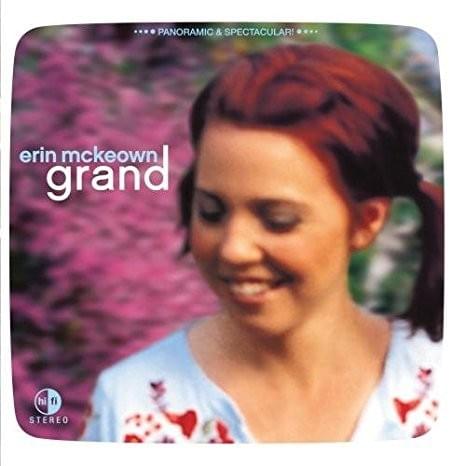
 View Artist