Song Meaning
The lyrics paint a picture of a Sunday evening winding down, with the festive atmosphere of amusement park rides ('baracconi con le luci chiuse') fading and a fashion-conscious girl lost in the rhythm of 'disco-dance, dance.' This scene sets a backdrop for the introduction of Sergej, a character presented as somewhat naive and disconnected from the wider world, yet possessing a specific, practical skill: dismantling bumper cars ('come si smonta un autoscontro'). The contrast between the superficiality of the girl's focus and Sergej's grounded, albeit niche, expertise is immediately apparent.
The central tension emerges in the narrator's plea to Sergej regarding 'her' – likely the girl mentioned earlier. The narrator questions if Sergej has ever spoken to her, if she even existed in his life, or if she's still fixated on something as mundane as pantyhose ('una serie di collant'). This suggests a disconnect, a missed opportunity, or perhaps a projection of the narrator's own desires onto Sergej's perceived world. The repeated phrase 'Tutto il resto è disco-dance, dance' acts as a dismissive refrain, implying that everything outside of this superficial, rhythmic existence is ultimately meaningless or irrelevant.
The most striking craft element is the juxtaposition of Sergej's seemingly simple, almost childlike, world with the narrator's complex emotional request. Sergej is described with a 'Polish face that has never seen the world,' yet he knows how to take apart a bumper car, a skill that generates 'sparks' ('tante scintille') when the bar is pulled. This imagery is potent, suggesting a raw, perhaps even dangerous, energy contained within him. The narrator then asks Sergej to ensure his daughter remembers 'one who cried inside' ('uno che piangeva dentro') and learns to flip a bumper car. This is a profound shift, asking Sergej to impart not just a mechanical skill but an emotional legacy, a memory of hidden sorrow and resilience, all while the world outside continues its 'disco-dance, dance.'
These lyrics resonate because they capture a specific kind of melancholy beneath a veneer of fleeting fun. The narrator seems to be grappling with the superficiality of modern life, represented by the 'disco-dance' and the fashion-obsessed girl, and projecting a desire for deeper connection and emotional truth onto the seemingly simple figure of Sergej. The request for his daughter to remember someone who 'cried inside' is a poignant plea for authenticity and emotional depth in a world that seems to prioritize surface-level entertainment, making the contrast between the external 'disco-dance' and the internal 'piangeva dentro' the core of the song's emotional weight.
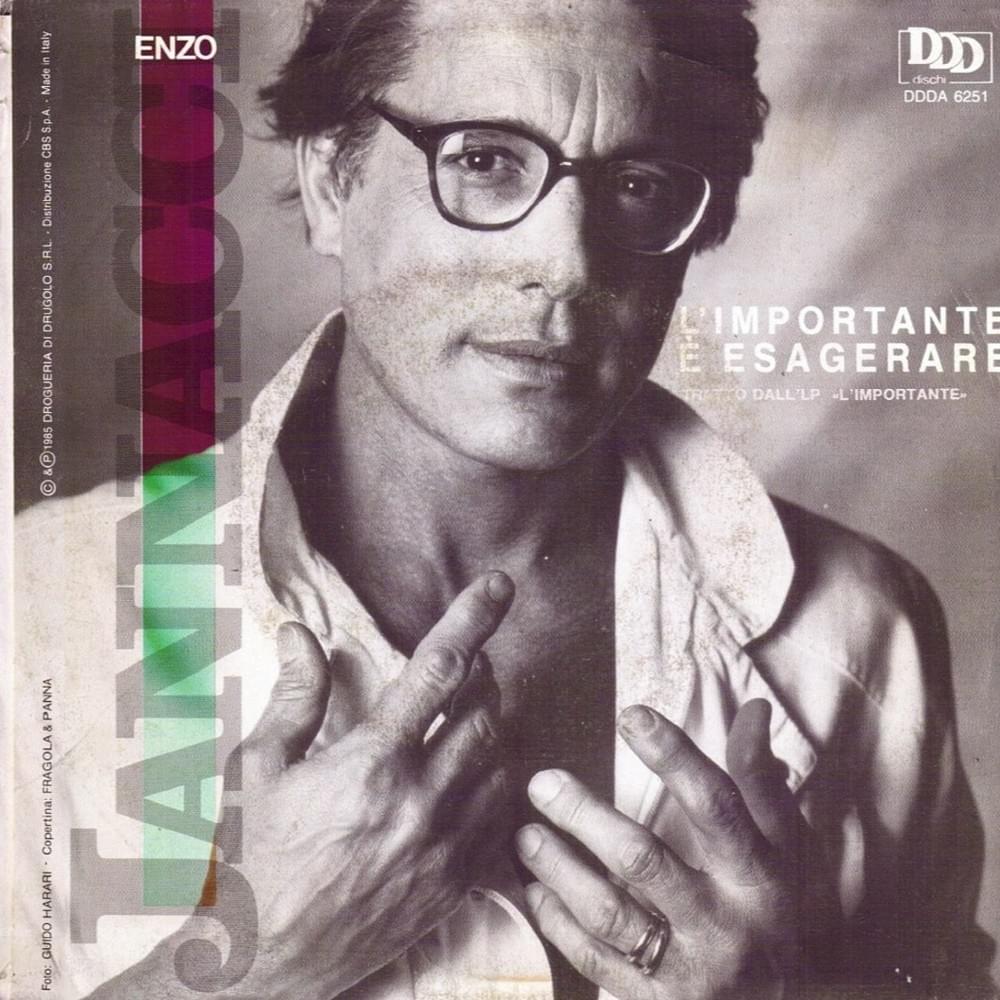
 View Artist