Song Meaning
The song opens with a hypnotic, repetitive hook, "Mira-mirandum-mirandum-mirando-madeira," which feels like a chant or a spell, setting a tone of longing and perhaps a journey. The verses immediately establish a departure at dawn, a common motif for beginnings or necessary separations. The narrator leaves their love behind, urging them to sleep while the narrator must go "to sing for those who are afraid" or "to look for those who are afraid." This suggests a duty or a calling that pulls the narrator away from the comfort of their beloved.
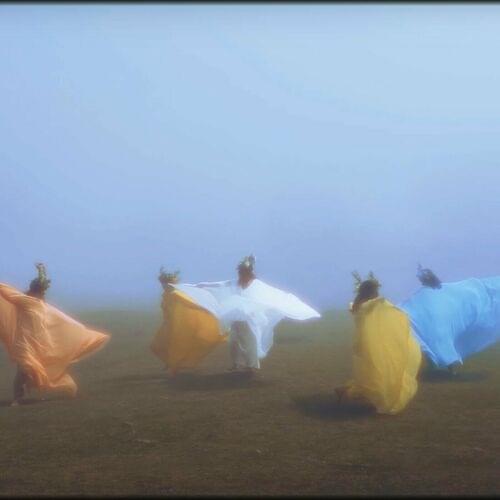
The central tension lies in the narrator's obligation versus their desire to be with their love. The repeated phrase "Deixa-te dormir oh meu amor que é cedo" (Let yourself sleep, my love, it's early) is a tender but firm dismissal, emphasizing the necessity of their departure. The imagery shifts from the "giesta" (broom) singing poems to the beloved, to the "bruma" (mist) dancing alone, and then to the "floresta" (forest) singing poems. These natural elements seem to mirror the narrator's own state – solitary, perhaps melancholic, but still carrying a message or a song for the one left behind.
A striking element is the subtle evolution of the narrator's purpose. Initially, they must "sing for those who are afraid." By the second verse, this shifts to "look for those who are afraid." This change implies a more active, perhaps searching role, moving beyond mere comfort to a more direct engagement with fear. The final verse reveals a profound gratitude for life and for the ability "to give you life too," repeated four times. This suggests the narrator's journey, though separating them from their love, is ultimately about nurturing life, perhaps even creating it, and finding deep appreciation in that act.
The effectiveness of these lyrics stems from their blend of tender farewells and a sense of urgent purpose. The contrast between the peaceful, sleeping beloved and the narrator venturing out into the world to confront fear creates a poignant emotional landscape. The repetitive, almost incantatory hook grounds the listener in a feeling of persistent longing or a quest, while the verses offer glimpses into the narrator's complex motivations and their eventual realization of profound gratitude for the act of giving life, even when it requires separation.
 View Artist