Song Meaning
{"song_id": 11801579, "meaning": "Emmanuel's \"Volar Pájaros, Volar\" isn't just a song; it's a wistful elegy for lost innocence, a sonic painting of childhood's receding horizon. The repetition of \"Volar, pájaros volar\" (Fly, birds, fly) functions as both a command and a melancholic observation. It’s the adult singer watching the untethered joy of youth – represented by the birds – soar away, knowing he can no longer join them. The lyrics evoke a sense of bittersweet acceptance, acknowledging the irreversible passage of time. The \"clouds of memories\" and the absence of \"spaces and times\" point to the fluid, boundless nature of childhood perception. These are the realms where imagination reigns supreme, where the sea offers flowers and the fields, limitless expanse. Emmanuel doesn't wallow in despair but rather recognizes a crucial transformation.
The heart of the song meaning resides in the contrast between the freedom of flight and the grounded reality of adulthood. The lines \"Que no los puedo alcanzar / Esque a transcurrido el tiempo / Yo me debo de quedar\" (That I can't reach them / Because time has passed / I must stay) carry a quiet resignation. The singer acknowledges that the carefree days are gone, replaced by the responsibilities and limitations that come with age. However, this isn't framed as a purely negative experience.
Emmanuel subtly suggests that this transition is a necessary part of growth. The progression from \"ir a jugar\" (going to play) to \"He aprendido a caminar\" (I have learned to walk) signifies maturity and the acquisition of new skills and perspectives. The final line, \"Yo les doy la libertad\" (I give them freedom), is particularly poignant. It's an act of selfless release, a recognition that holding onto the past is ultimately futile. Instead, the singer chooses to liberate those youthful memories, allowing them to exist as a source of inspiration and perhaps, a gentle reminder of the boundless possibilities that once were."}
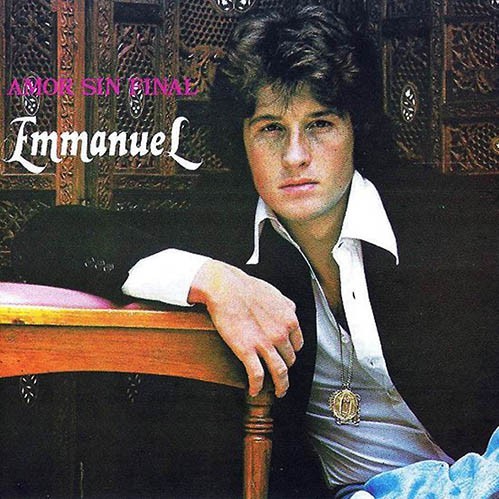
 View Artist