Song Meaning
{"song_id": 11801583, "meaning": "Emmanuel's \"Sin Caballero No Hay Dama\" isn't just a romantic serenade; it's a sophisticated, almost cynical deconstruction of love itself. The song's genius lies in its paradoxical nature, simultaneously idealizing and demystifying the very concept of 'amor.' He begins by challenging the listener's (specifically, a woman's) perceived understanding of love, dismissing purely physical experiences as a shallow imitation. He suggests that true love transcends mere physical connection, hinting at a deeper, perhaps more painful, reality. He dares to say that 'amor es no darse cuenta / Que es el disfraz del dolor' (love is not realizing / that it is the disguise of pain).
The lyrics then unfold as a series of metaphorical definitions, each painting a complex and often contradictory picture of love. \"Amor es una carta sin sobre\" (Love is a letter without an envelope) speaks to vulnerability and exposure. \"Amor es la moneda del pobre\" (Love is the coin of the poor) suggests that love is a currency available to everyone, regardless of material wealth, but perhaps also hinting at its potential for devaluation. The repeated refrain, \"Sin caballero no hay dama\" (Without a gentleman, there is no lady), isn't simply about traditional gender roles; it implies a necessary reciprocity and respect, a dance of equals where chivalry isn't just etiquette, but a foundational requirement.
Ultimately, “Sin Caballero No Hay Dama” is a challenge to conventional notions of love. Emmanuel doesn't offer easy answers or saccharine sentiments. Instead, he presents love as a multifaceted, sometimes painful, always complex experience that demands both vulnerability and respect. The song's enduring appeal rests on its ability to resonate with listeners who have experienced the highs and lows of love and are willing to confront its inherent contradictions. It's a song for those who understand that true love is not just a feeling, but a conscious choice, a constant negotiation, and an unwavering commitment to chivalry in its deepest sense."}
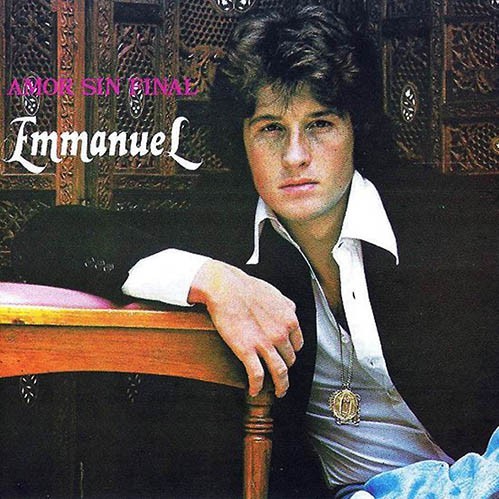
 View Artist