Song Meaning
The lyrics paint a picture of yearning, using celestial imagery to express a deep longing for a distant love. The narrator contrasts the perceived perfection of 'heaven' and the 'moon' with the emptiness of their current reality, where 'there is no love' because the object of their affection is absent. This absence creates a palpable tension, a feeling that the world itself is incomplete without their presence. The repeated question, 'How high the moon?', becomes a metaphor for the seemingly insurmountable distance and the immense, almost cosmic scale of their desire.
The central conflict lies in the gap between an idealized 'somewhere' and the stark present. The narrator posits that heaven and music exist, but only in abstract or distant forms until their love is reciprocated and present. The phrase 'Till it comes true / That you love me as I love you' is the crucial condition, the pivot upon which their entire emotional landscape turns. Until that moment, the 'darkest night would shine' only if the beloved were to arrive, highlighting the profound impact of this singular relationship on the narrator's perception of the world.
A fascinating meta-commentary emerges in the latter half, where the song acknowledges its own potential inadequacy. The lines 'How high the moon / Is the name of this song / Though the words may be wrong' suggest a self-awareness that the literal lyrics might not fully capture the depth of the feeling. This is amplified by the dedication, 'We're singing it / Because you asked for it / So we're swinging it / Just for you.' It transforms the performance into a direct, personal offering, a musical gesture aimed at bridging the very distance the lyrics describe.
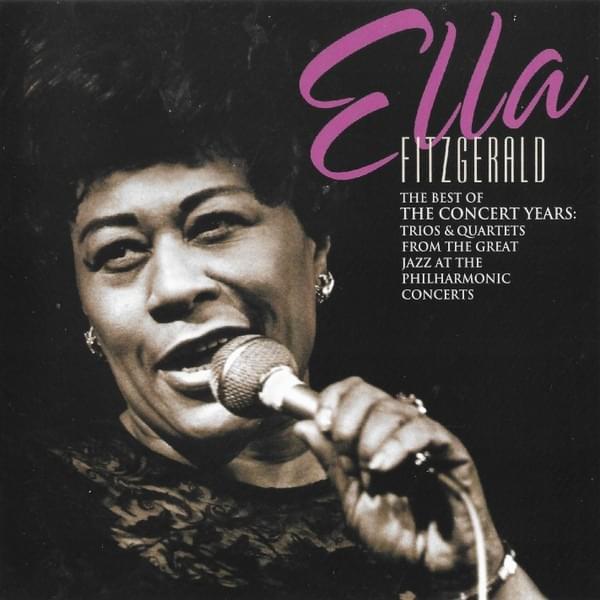
Ultimately, the effectiveness of these lyrics stems from their ability to translate an intimate, personal ache into grand, universal terms through the moon and stars. The live performance context, hinted at by the scatting and the acknowledgment of the audience ('these people don't know what I'm singing'), adds another layer, suggesting that even within a public setting, the song remains a private message, a heartfelt plea wrapped in a jazz standard, asking the cosmos and the beloved the same question: how far away is happiness?
 View Artist