Song Meaning
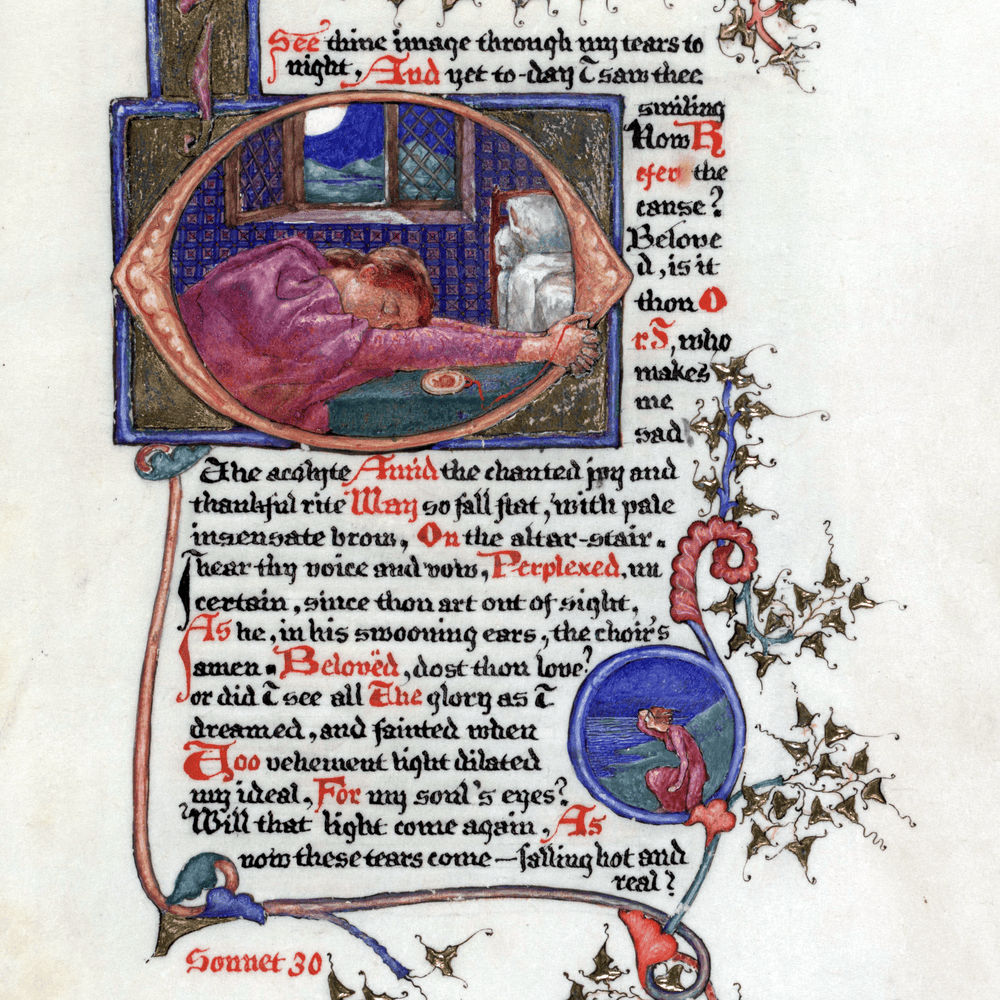
This sonnet grapples with the painful paradox of love that feels too unequal to be given. The speaker questions the very act of offering their affections, seeing their own emotional state as a burden too heavy for the beloved. The dominant tone is one of self-recrimination and hesitant devotion, a stark contrast between the desire to give and the fear of causing harm.
The central tension arises from the narrator's perceived inferiority, stating, "We are not peers, / So to be lovers." This isn't about social standing but an internal assessment of their own worthiness and the potential damage their 'gifts' might inflict. The tears are "salt as mine," and the years "re-sighing on my lips renunciative," suggesting a deep, perhaps melancholic, history that the speaker fears will contaminate the beloved's brighter existence.
The most striking craft element is the series of stark negations and vivid, almost violent, imagery used to refuse the act of giving. The speaker declares they will "not soil thy purple with my dust, / Nor breathe my poison on thy Venice-glass." The contrast between the beloved's presumed richness ("purple," "Venice-glass") and the speaker's perceived decay ("dust," "poison") powerfully illustrates the perceived imbalance and the speaker's desperate attempt to protect the beloved from their own perceived flaws.
Ultimately, the lyrics resonate because they articulate a profound, albeit self-imposed, sacrifice. The narrator's love is so intense that it leads them to believe the most loving act is to withhold it, to prevent their own perceived 'un-generous' nature from tainting the beloved. The final, almost whispered, confession, "Beloved, I only love thee! let it pass," encapsulates this agonizing self-denial, making the unspoken love the most potent element.
 View Artist