Song Meaning
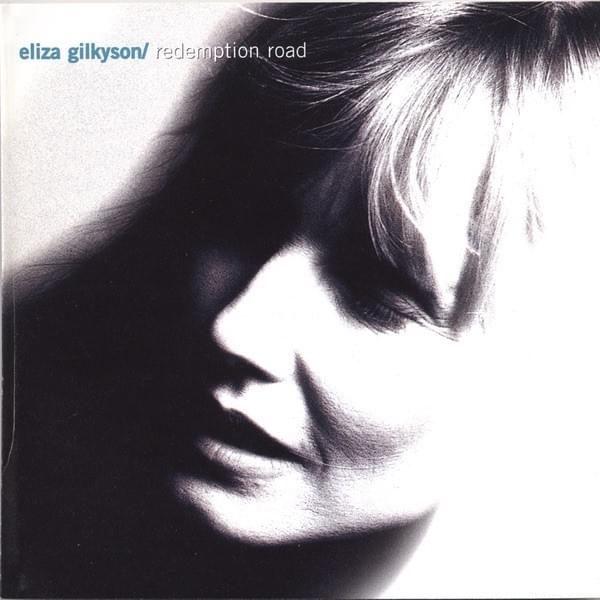
{"song_id": 15483676, "meaning": "Eliza Gilkyson's \"Redemption Road\" isn't a travelogue; it's a cartography of the self after a cataclysm. The opening lines, \"Floating along in my mind / Wandering between / Yours and mine,\" immediately establish a psychic geography, a borderland between connection and autonomy. That \"thin line, redemption\" suggests not a singular event, but a continuous negotiation. It's the delicate balance struck after loss or disillusionment, where the 'love's afterglow in the dark' flickers like a pilot light. The soul spark of redemption ignites in the darkness. Gilkyson isn't necessarily seeking forgiveness from an external source, but rather excavating it from within. The declaration, \"I don't care I'm alone / I've got a dream of my own / All of my plans are blown,\" isn't defiant, but a quiet act of self-possession.
The chorus anchors the abstract yearning with the concrete image of \"Redemption Road.\" It's a journey inward, fueled by hope. The \"prayer to the sky\" and \"heart's winged arrows\" convey a reaching out, but the destination is the \"bull's eye,\" suggesting a laser focus on self-discovery. It's a pilgrimage undertaken not to find something new, but to reclaim something lost.
The final verse introduces a landscape both beautiful and desolate: \"Shadows of cottonwoods loom / Wild dogs howl at the moon.\" These aren't picturesque details; they're psychological markers. The looming shadows represent the persistent weight of the past, while the howling dogs suggest a primal loneliness. Yet, within this starkness, there's also \"a love tune.\" This juxtaposition is key to understanding the song's meaning. \"Redemption Road\" isn't about escaping pain, but about finding a melody within it, a way to harmonize with the wilderness of the self. It's a testament to the enduring human capacity to find beauty and meaning even in the most desolate landscapes of the heart."}
 View Artist