Song Meaning
The lyrics paint a vivid picture of a train carrying a boy, setting a scene of constant motion and the unfolding of life. The dominant tone is one of gentle, almost wistful, forward momentum, where the train's journey mirrors the passage of time and the inevitability of destiny. The imagery of the train, the boy, and the world around them – city, night, land, mountains, sea – all seem to be in perpetual rotation, emphasizing a sense of cyclical movement and the vastness of the world the boy is traversing.
The central tension lies in the juxtaposition of the train's movement and its destination, or lack thereof. "Lá vai o trem sem destino" (There goes the train without a destination) suggests a journey without a clear end in sight, yet it's also moving "Pro dia novo encontrar" (To find the new day). This creates a feeling of hopeful uncertainty, where the future is unknown but approached with a sense of natural progression, carried along by the rhythm of the train and the unfolding of life's "ciranda e destino" (roundabout and destiny).
The most striking aspect of the craft is the pervasive repetition of "Lá vai o trem" (There goes the train), which acts as a hypnotic refrain, grounding the listener in the train's steady rhythm. This repetition, combined with the expansive imagery of "Correndo entre as estrelas a voar" (Running among the flying stars), elevates the simple train ride into something almost cosmic. The lyrics suggest that even a seemingly ordinary journey is part of a grander, continuous flow, connecting the earthly "terra" and "serra" with the celestial "estrelas."
This piece is effective because it captures a universal feeling of being carried along by life's currents. The gentle, flowing language and the imagery of continuous motion evoke a sense of both melancholy and wonder. It’s the feeling of watching something significant unfold from a distance, acknowledging the vastness of the world and the unknown path ahead, all set to the steady, comforting pulse of a train's journey.
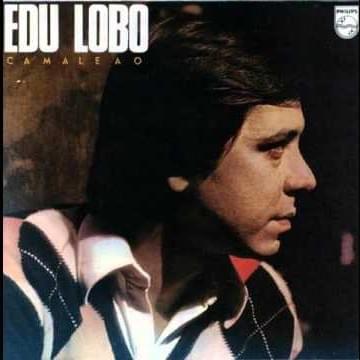
 View Artist