Song Meaning
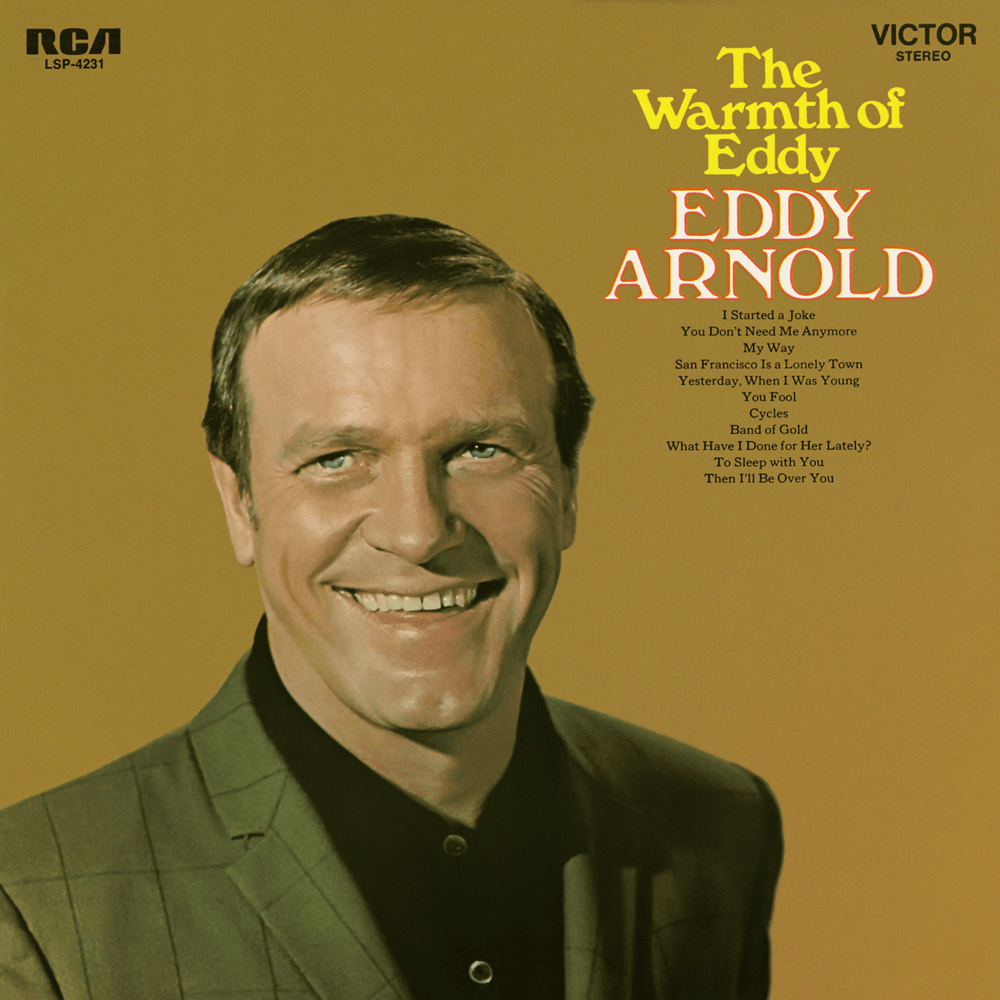
Eddy Arnold's "Then I'll Be Over You" isn't a song about love; it's a stark, almost clinical dissection of grief's long shadow. The track presents a series of hypothetical milestones, each marking a stage in the arduous journey of emotional recovery. It's less about finding a new love and more about the slow, grinding process of un-loving someone, a far more challenging endeavor. The repetition of "Then I'll be over you" acts as both a promise and a lament, highlighting the distance between the present pain and the hoped-for future peace. Arnold isn't singing about moving on; he's mapping the interior landscape of someone desperately trying to escape the gravitational pull of a lost connection. The song's power lies in its unflinching honesty about the struggle to forget, a struggle many find more relatable than the initial flush of romance. He is not there yet, as the song states conditions that do not yet exist.
Noticeably, the lyrics sidestep traditional romantic imagery, focusing instead on the mundane realities of daily life. The simple act of falling asleep, waking up, or even just not seeing a former lover's face becomes monumental. This elevates the everyday to the extraordinary. It's a testament to how a broken heart can warp perception, turning ordinary moments into painful reminders. The line, "When I feel alive once again," is particularly poignant. It suggests that the heartbreak has not just caused sadness but a fundamental disconnect from life itself. The song examines the psychological impact of loss, where even the body's natural rhythms—the beat of a heart—become indicators of progress, or the lack thereof.
Ultimately, "Then I'll Be Over You" resonates because it acknowledges the messy, non-linear nature of healing. There's no easy fix, no magic cure. The song offers no quick resolution, only a series of benchmarks that may or may not be reached. The "lyrics analysis" reveals a vulnerability that transcends genre. It's a quiet admission that sometimes, the hardest thing we'll ever do is simply get out of our own way and let time do its work, however glacially slow that process may be. The song's meaning is entrenched in the sorrow of what has been lost, and it provides little hope for a bright future.
 View Artist