Song Meaning
This song kicks off with a stark pronouncement: love without reciprocation is a fate worse than crucifixion. The narrator expresses a strong aversion to the modern woman, framing her as disdainful and solely focused on 'orgia.' This sets a tone of bewilderment and perhaps a touch of resentment towards contemporary romantic dynamics.
The central tension arises from a perceived contradiction in gender roles and power. The common saying that 'woman is the weaker part' is directly challenged. The lyrics suggest that despite a man's supposed 'fortaleza' (strength), he readily relinquishes his 'nobreza' (nobility) to do a woman's bidding, implying a hidden influence or control she wields.
The most striking craft element is the ironic reversal of perceived weakness. While society labels women as the 'parte mais fraca,' the narrator observes that through intimacy – 'beijos e abraços e carinhos' – men are so captivated they might even resort to 'roubar' (stealing) to maintain the affection. This highlights a subtle, yet powerful, leverage women possess, turning the notion of weakness on its head.
Ultimately, the lyrics resonate because they tap into a timeless anxiety about control and desire within relationships. The narrator's seemingly traditional pronouncements are complicated by an acknowledgment of female agency, even if framed through a lens of bewilderment. The effectiveness lies in this unexpected twist, where perceived vulnerability becomes a source of potent influence.
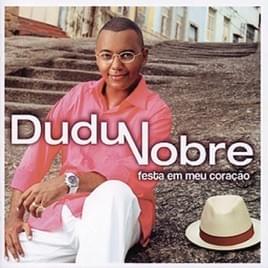
 View Artist