Song Meaning
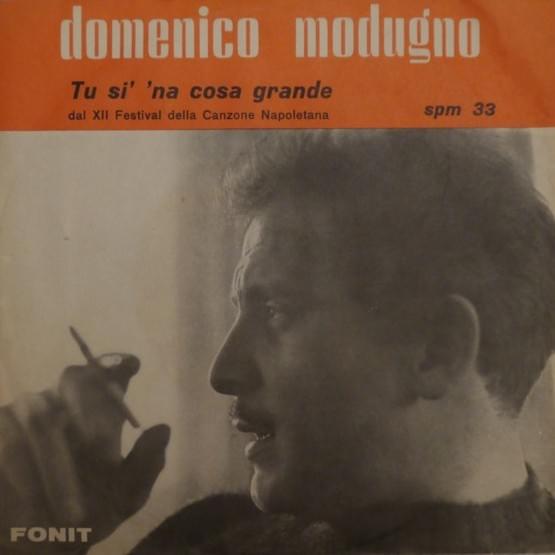
{"song_id": 14760358, "meaning": "Domenico Modugno's \"Tu sî 'o mare\" isn't just a song; it's a raw, visceral portrait of love as both a life-giving force and an unpredictable tormentor. Sung in Neapolitan, the lyrics cut straight to the bone, depicting a relationship defined by its volatile nature. The central metaphor casts the object of affection as the sea itself – capable of moments of profound tranquility, \"calma un'ora sola,\" only to be followed by the inevitable storm, \"e poi vene 'o temporale.\" This isn't a love built on stability; it's a love lived on the edge of chaos, constantly shifting between bliss and despair.
The song meaning deepens with the contrasting image of the singer as a rudderless sail, completely at the mercy of the beloved. \"Tu sî 'o sole, e io 'na vela / Vela senza timone / Ca la puorte / Addò vuó tu\" – you are the sun, and I a sail, a sail without a rudder, that you carry where you want. This power dynamic is stark and unsettling. There's a vulnerability bordering on masochism in the speaker's complete surrender. The repetition of \"Ca la puorte / Addò vuó tu\" (that you carry where you want) emphasizes the lack of control, the dizzying feeling of being swept away by the other person's whims.
Ultimately, \"Tu sî 'o mare\" captures the intoxicating, yet potentially destructive, nature of passionate love. It acknowledges the thrill of surrendering to someone completely, while simultaneously recognizing the inherent danger in relinquishing all autonomy. The beauty of Modugno's delivery lies in his ability to convey both the yearning and the fear, leaving the listener to grapple with the complex emotions at the heart of the song's meaning. It's a portrait of love as a force of nature, both beautiful and terrifying, and a testament to Modugno's skill as a storyteller."}
 View Artist