Song Meaning
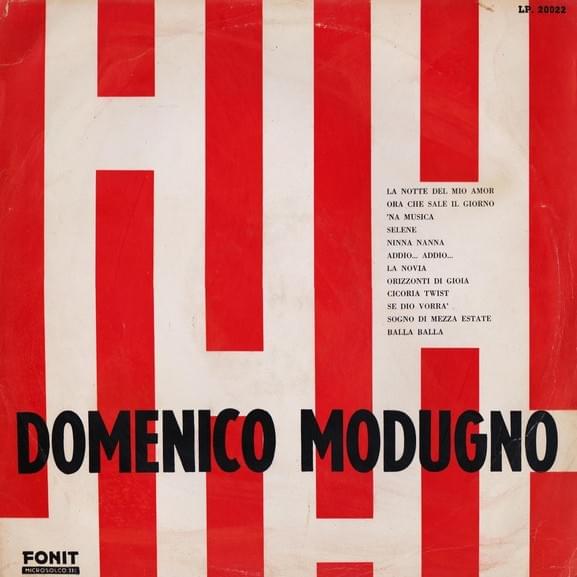
{"song_id": 14760318, "meaning": "Domenico Modugno's \"Ninna nanna\" isn't just a lullaby; it's a glimpse into the complex psyche of parenthood, steeped in Sicilian dialect and delivered with a knowing wink. The repetition of \"Ulie ci tene, ulie\" acts as a hypnotic anchor, drawing us into a world where tenderness clashes with exasperation. The lyrics, while seemingly simple, reveal a struggle to soothe a restless child, a universal experience for parents across cultures. The promise of a beautiful cherry that everyone wants to kiss is juxtaposed with the threat of giving the child to \"lu mammuni\" (the bogeyman) if they don't fall asleep, highlighting the push and pull between affection and frustration.
The song meaning of \"Ninna nanna\" resides in this very tension. The parent, weary and perhaps at their wit's end, oscillates between offering comfort (\"Ninna nanna, beddu miu / Dormi, dormi, non chianciri\") and expressing exasperation at the child's stubbornness (\"Che ne fazzu, che ne fazzu / De 'stu cinnu capricciusu\"). This is not a saccharine portrayal of parenthood; it's raw and relatable. The lyrics acknowledge the less-than-perfect moments, the times when patience wears thin, and the temptation to resort to empty threats looms large. The child is described as \"capricciusu\" (capricious) and \"lazzaruni\" (lazy), words that betray a hint of parental weariness.
Ultimately, Domenico Modugno's \"Ninna nanna\" lyrics analysis reveals a deeper truth about the human condition. It's a reminder that love and frustration can coexist, that even in moments of exhaustion, the bond between parent and child endures. The song's power lies in its honesty, its refusal to shy away from the less idyllic aspects of raising a child. The threat of \"lu mammuni\" serves not as a genuine menace, but as a darkly humorous expression of the parent's temporary loss of control, a feeling that many listeners can recognize and perhaps even chuckle at. It's a lullaby for both the child and the parent, a shared moment of vulnerability and connection."}
 View Artist