Song Meaning
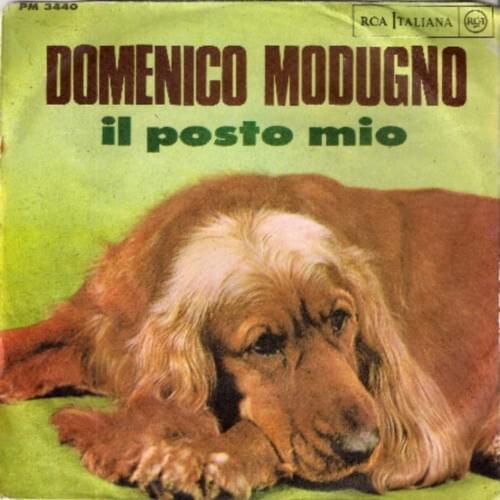
{"song_id": 14760440, "meaning": "Domenico Modugno's \"Il Posto Mio\" isn't a love song in the conventional sense; it's a stark, almost unsettling, exploration of devotion bordering on self-annihilation. The speaker positions himself as utterly subservient to his lover, a doormat (\"lo scendiletto\") upon which she treads, a mirror reflecting only her existence. The lyrics paint a portrait of a man whose identity is completely subsumed by another, finding value only in his lover's validation. He sees himself as a dog, blindly loyal, his entire world revolving around her whims. Modugno masterfully conveys the unsettling nature of such unbalanced power dynamics. The question isn't whether the woman is manipulative, but rather the man's willingness to relinquish his own agency. He’s not asking for pity; he’s stating a disturbing truth.
The repeated phrase \"Vorrei vedere un altro al posto mio\" (I'd like to see another in my place) initially sounds like a challenge, a possessive declaration of worth. However, it quickly morphs into a desperate plea for reassurance. The speaker doubts his own value, wondering if anyone else would tolerate this level of self-effacement. This insecurity is further highlighted by the line, \"Io sono quello che ti dà ragione, anche se hai torto marcio\" (I am the one who agrees with you, even when you are completely wrong). It’s not about love, but about maintaining the status quo, even at the expense of truth and integrity. He’s enabling, not loving.
The seemingly apologetic outro, \"Anzi ti chiedo scusa, mi son sfogato un po'\" (In fact, I apologize, I vented a little), is perhaps the most chilling aspect of the song. It underscores the speaker's complete lack of self-worth. Even expressing a fleeting moment of frustration requires an apology, reinforcing the idea that his only purpose is to serve and placate. \"Il Posto Mio\" is therefore a disturbing, yet compelling, examination of codependency and the dangers of sacrificing one's self for the sake of another's affection. It's a dark reflection on the human need for validation and the lengths to which some will go to obtain it, a raw nerve exposed by Modugno's poignant delivery."}
 View Artist