Song Meaning
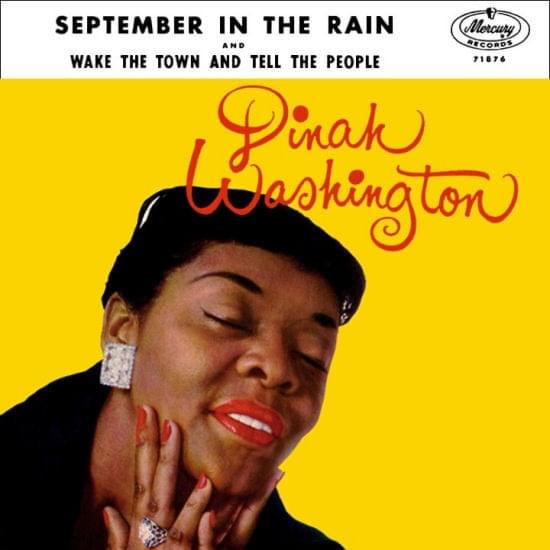
{"song_id": 12491473, "meaning": "Dinah Washington's \"September in the Rain\" isn't just a song; it's a masterclass in emotional weather forecasting. The track paints a vivid portrait of a memory so potent, so deeply etched, that it warps the listener's perception of time itself. The opening lines establish the setting, not just as a month and a meteorological event, but as a specific emotional landscape. \"The leaves of brown came tumblin' down\" – a visual shorthand for decay and loss – sets the stage for a love affair tinged with melancholy. The sun, a symbol of vitality, goes out \"just like a dying ember,\" hinting at a romance that may have flickered brightly but was ultimately unsustainable.
The genius of Washington's interpretation lies in her ability to convey how a singular moment can become a perpetual state of being. The refrain, \"To every word of love I heard you whisper, the raindrops seemed to play a sweet refrain,\" suggests that the memory is both beautiful and bittersweet. The rain, typically associated with sadness, is transformed into a \"sweet refrain,\" indicating that even the pain of the past can be a source of comfort and nostalgia. It is not simply a memory of lost love; it is the memory of being in love and the perfection of the moment.
The song's emotional core is revealed in the lines, \"Though spring is here, to me it's still September.\" This is where the song transcends a simple love ballad and becomes a meditation on the enduring power of memory. Spring, a season of rebirth and renewal, is rendered meaningless by the speaker's fixation on the past. The implication is that the experience in \"September in the Rain\" was so profound that it has permanently altered her emotional state. She is trapped in a perpetual autumn, forever haunted – or perhaps comforted – by the echoes of a love that once was. The song explores a bittersweet kind of longing, where the past is not something to be escaped, but rather a place to which one is inextricably bound."}
 View Artist