Song Meaning
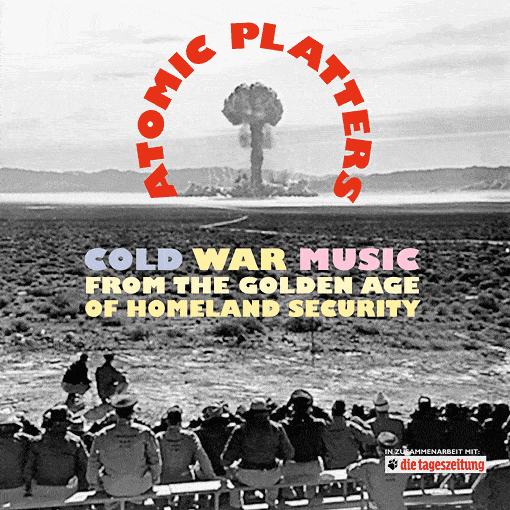
The narrator expresses a deep yearning for normalcy and happiness, a desire to be "gay" in the older sense of cheerful and carefree, and "normal in every way." This fundamental wish is immediately undercut by the persistent, ominous image of a "mushroom cloud" that overshadows their dreams and future plans. This stark contrast between personal aspiration and an external, existential threat sets the immediate emotional tone: a desperate hope battling a pervasive dread.
This dread is amplified by the narrator's relationship. They have a "sweetheart" and "love her, too," with shared "big plans," yet the "mushroom cloud has changed every rule." The lyrics suggest this external force has not only disrupted practical possibilities but also "deepened our thinking," forcing a premature and heavy contemplation of existence. The repeated, pleading "Please, please, please where did you go?" acts as a desperate, unanswered question directed at this lost sense of security or perhaps a guiding force that has vanished.
The most striking aspect of the writing is how the "mushroom cloud" functions as a constant, suffocating metaphor. It's not just a past event but an ongoing presence, "hangs over my dreams," "haunts my future," and "hangs in the way." This creates a palpable sense of paralysis, where even intimate moments of connection and planning are shadowed by an inescapable, apocalyptic vision. The repeated cycle of praying, partying, laughing, and praying again highlights a coping mechanism of seeking solace and distraction, yet the underlying anxiety remains, as they "tried not to think of the mess we're in."
Ultimately, the lyrics resonate because they capture a specific kind of youthful anxiety born from living under a shadow of potential destruction. The narrator's simple, relatable desires for love and a future are rendered poignant by the overwhelming, abstract threat. The shift from "Tomorrow looks black" to the resolve to "live for today" is a direct consequence of the craft: the persistent, suffocating metaphor forces a re-evaluation of time and priorities, making the present moment the only tangible reality in the face of an uncertain, potentially nonexistent future.
 View Artist