Song Meaning
{"song_id": 15089687, "meaning": "Denny Laine's \"Look at Me\" isn't just a plea for attention; it's a layered interrogation of love, consequence, and the uncertain future of a relationship teetering on the edge. The song's initial verses establish a palpable tension. The singer isn't simply asking to be seen; he's demanding accountability. The line about breaking \"too many peoples hearts\" suggests a pattern of behavior, a history of romantic recklessness that casts a shadow over the present. He's not just worried about his own feelings; he's concerned about the karmic debt his lover might be accruing. This adds a surprising depth, hinting at a moral dimension to the relationship beyond simple infatuation. The insistent \"Hey, hey, look at me\" refrain underscores a desperate need for honesty and transparency.
The focus then shifts, ever so subtly, from judgment to vulnerability. The inquiry about the \"twinkle in your eye\" moves away from past transgressions and toward present affections. Is that spark genuine, or is it merely a fleeting attraction destined for someone else? This vulnerability is further amplified by the repeated request: \"Look at me from now on / Know the love we share / Look at me from now on / Let me know you care.\" The lyrics now demand a commitment to the present, a conscious choice to acknowledge and nurture the existing bond. It is no longer enough to simply be seen; there must be an active participation in the relationship.
Ultimately, \"Look at Me\" circles back to the initial uncertainty, but with a crucial difference. The final verse, with its question of marriage, elevates the stakes considerably. The potential consequences are no longer abstract or karmic; they are immediate and deeply personal. The song, in its entirety, becomes a negotiation, a precarious dance between suspicion and hope. Denny Laine uses the simple structure of the lyrics to create a complex portrait of a love affair fraught with baggage, longing, and the ever-present question of whether it can truly endure."}
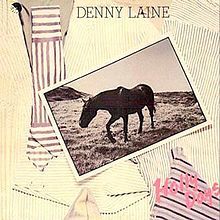
 View Artist