Song Meaning
The lyrics present a radical rejection of religious dogma, particularly Christianity, framing it as a system of control and deception. The opening lines immediately establish a triumphant tone: "Free of their god, intelligence won." This suggests a liberation from external authority, urging listeners to "Go with your instinct to live as you want." The "thieves" are depicted as powerless against this newfound self-awareness, unable to approach someone who can "through them you can see." This perspective positions the narrator as having transcended a manipulative system.
The central conflict revolves around shedding inherited religious "deceit" and embracing a personal truth. The lyrics explicitly command to "Denounce the father, undo his disguise" and "refuse the son," directly challenging core tenets of Christian belief. The "bible" is framed as a source of "deceit," while going "Above it enlighten to what you can be." This implies a spiritual awakening that is not divinely ordained but self-generated, finding power within rather than through external salvation. The repeated cry of "SERPENTS OF THE LIGHT" acts as an anthem for this anti-establishment awakening.
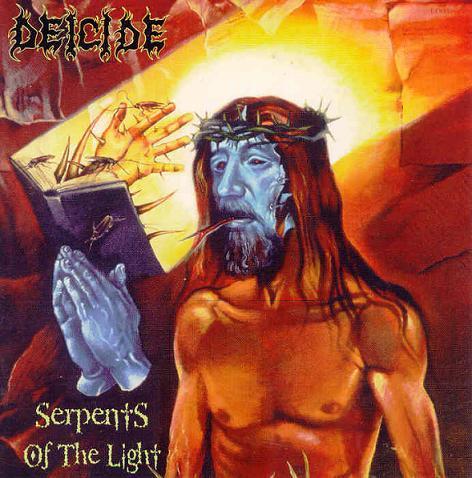
The most striking craft element is the paradoxical imagery of "Serpents of the Light." Traditionally, serpents are associated with temptation and evil, while light signifies purity and divinity. Here, the serpent is reclaimed as a symbol of enlightenment and freedom, a force that "harness[es] the power to refuse the son." The lyrics also employ sharp, accusatory language like "revolting parasite" and "thorns in paradise," painting a vivid picture of religious institutions as invasive and destructive forces that corrupt a natural state of being.
These lyrics hit hard by tapping into a primal urge for autonomy and self-determination, directly confronting and dismantling perceived spiritual oppression. The forceful commands and declarative statements create an urgent, almost revolutionary fervor. By inverting traditional religious symbolism and framing intelligence and instinct as the ultimate authorities, the song offers a powerful, albeit aggressive, vision of liberation from what it portrays as a "lie" of "heaven's compassion."
 View Artist