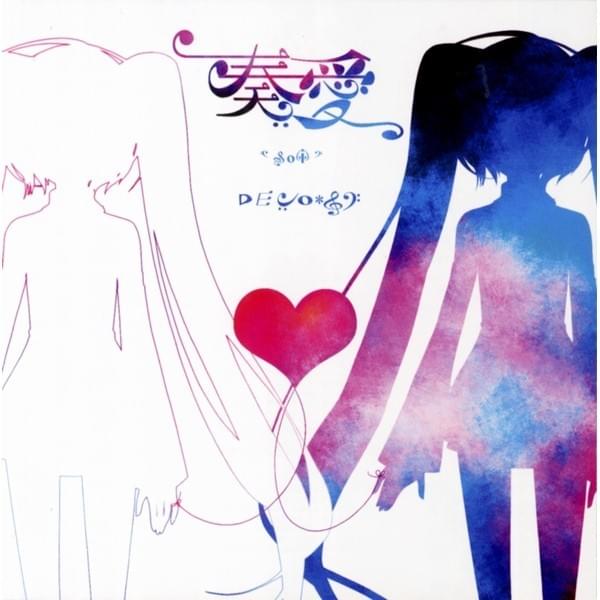
Song Meaning
The lyrics present a mathematical-like equation for identity and connection, centering on the concept of 'Ai' (love) and 'K'. The narrator grapples with their own existence, asking "Boku wa nani?" (What am I?) and "Boku wa doko?" (Where am I?) as they try to solve for themselves. The core tension arises from the desire to merge or understand another person ('Kimi') through this equation, suggesting a deep longing for unity or validation.
The central conflict seems to be the narrator's struggle to define themselves in relation to 'Kimi'. They express a desperate need to be understood and to understand 'Kimi', stating "Ai tasu aKi ga boku ni naru you ni" (So that love plus aKi becomes me). This pursuit is intense, even framed as "Ai tasu kei ni shosu kimi ga warau made" (Punished with love plus, until you laugh), implying a relentless effort to achieve this connection, no matter the cost.
A striking element is the repeated manipulation of the equation, particularly the subtraction "AKi-K wa nai yo?" (AKi minus K doesn't exist, right?). This suggests that without 'Kimi', the narrator's own identity or the possibility of their connection is rendered nonexistent. The phrase "kimi ga boku de boku ga kimi de" (you are me and I am you) further emphasizes this blurring of boundaries, highlighting a profound, almost existential dependence on the other person for self-definition.
Ultimately, the lyrics convey a powerful, almost obsessive yearning for connection and belonging. The narrator's repeated assertion "Ashi'su yo Ashi'su yo tsukinai ai wo" (I'll add, I'll add, endless love) and "Nasu yo nasu yo kimi no negai wo" (I'll achieve, I'll achieve, your wish) reveals a dedication to fulfilling the other's needs as a means of solidifying their own place. The final, hopeful question, "Hajimete no """ (The first ""), suggests a desire for a shared, unspoken understanding or a new beginning born from this intense equation of love and identity.