Song Meaning
The lyrics confront the listener with a stark question: what are you waiting for? The narrator challenges the illusion of certainty, suggesting that life's moments are inherently fleeting and pregnant with possibility. The repeated rhetorical questions, "Waar wil je op wachten?" (What do you want to wait for?) and "Waarom nog wachten? Waarom niet nu?" (Why wait any longer? Why not now?), create a sense of urgency. It's a direct plea to abandon hesitation and embrace the present.
The central tension lies in the conflict between a desire for security and the reality of time's relentless march. The lyrics paint a picture of someone trapped in a cycle of overthinking and fear, "Dat wikken en wegen / Je blijft aan de gang" (That weighing and considering / You keep going). This indecision, the narrator argues, leads to missed opportunities, where "alles weer anders / En het komt er niet van" (everything will be different again / And it won't happen). The fear of making the wrong move paralyzes action, ironically ensuring that nothing happens at all.
The most striking aspect is the forceful assertion that "Later bestaat niet" (Later doesn't exist). This isn't just a philosophical musing; it's presented as a practical truth, "Je weet hoe dat gaat" (You know how it goes). The lyrics dismantle the concept of a future deferred, framing it as a dangerous illusion that leads to regret. The repetition of "Later is te laat" (Later is too late) hammers home this point, transforming the abstract idea of time into a tangible threat.
Ultimately, the effectiveness of these lyrics stems from their direct, almost confrontational, address. By stripping away the comfort of future possibilities, the song compels introspection. The call to action, "Dus doe hoe je zelf wilt / En neem je besluit" (So do as you wish / And make your decision), coupled with the imperative to express oneself authentically, "Laat ze het weten / Hoe jij het voelt" (Let them know / How you feel), empowers the listener. It’s a powerful reminder that the only time we truly possess is now.
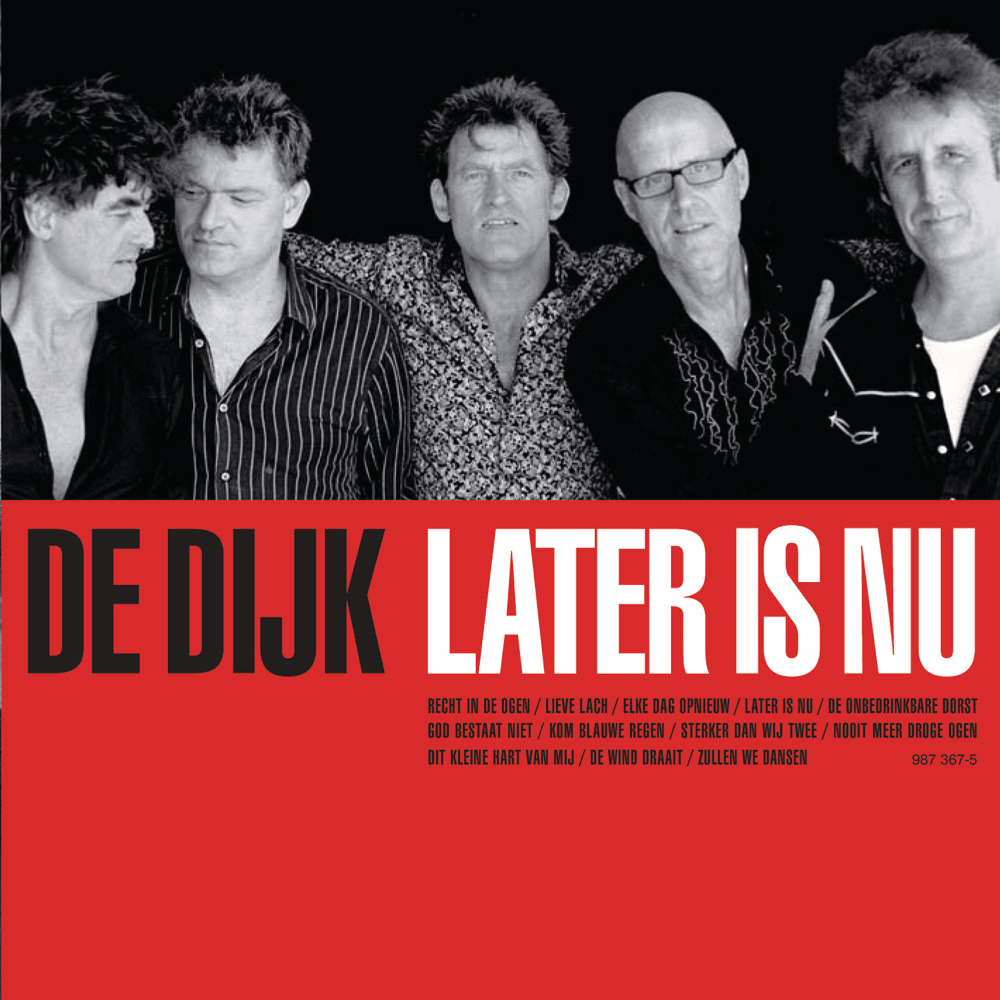
 View Artist