Song Meaning
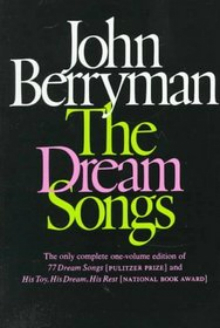
The lyrics paint a complex portrait of a departed figure, initially described with a dismissive, almost petty malice, like "a pimple down his good / Big face." This sets up an immediate tension: the narrator acknowledges a negative trait but seems to downplay its significance, perhaps as a coping mechanism or a way to reframe memory. The abrupt shift to expressing sorrow over "Mr Frost has left" introduces a sense of loss and confusion, hinting that the narrator struggles to fully grasp the deceased's nature or the impact of their absence. The phrase "I like it so less I don't understood" reveals a profound disorientation.
The core conflict appears to be the narrator's grappling with the duality of the deceased's personality. While acknowledging past "blue slanders" that required an apology, the narrator also recalls a private persona that was "difficult, always" but "courteous." This suggests a person who was not easily categorized, whose public or perceived flaws were at odds with a more nuanced private self. The narrator's inability to articulate their feelings fully, stating "I can't say what I have in mind," underscores this internal struggle to reconcile conflicting impressions.
The craft here lies in the juxtaposition of stark, almost crude imagery with a more formal, elegiac tone. The initial description of malice as a "pimple" is jarringly mundane, contrasting sharply with the later, more abstract "Gentle his shift, I decussate & command." This linguistic oscillation mirrors the narrator's own wavering perception of the deceased, moving from a petty observation to a more profound, albeit still uncertain, reflection. The narrator seems to be sifting through memories, trying to find a coherent narrative.
Ultimately, the effectiveness of these lyrics stems from their raw honesty about the difficulty of memorializing someone complex. The narrator doesn't offer easy answers or a neat summation. Instead, they convey a genuine sense of bewilderment and a quiet respect for the "unusual man" who has passed, leaving behind a legacy that defies simple definition. The final lines, a plea to a "Stoic deity," suggest a search for meaning in the face of an incomprehensible absence.
 View Artist