Song Meaning
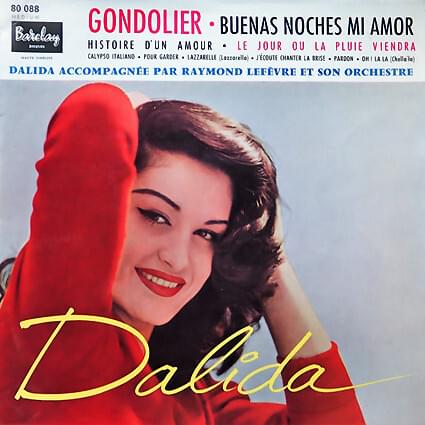
The lyrics paint a nostalgic picture of a past romance, anchored by the recurring image of a gondolier and his song. The opening verses recall a specific memory: bare feet on a gondola, a barcarole being sung for "him and me." This shared experience is presented as fated, "written for life," evoking a sense of idyllic happiness. The repetition of "Lui et moi" (him and me) emphasizes the exclusivity and intensity of this past connection.
The central tension emerges with the shift to Italian, where the narrator declares "Io ti amo / Con tutto il cuore" (I love you / With all my heart) and "Solo te / Adorerò" (Only you / I will adore). This passionate declaration is immediately followed by a conditional promise: "E sappendo / Che tu mia ami / Ti amerò / Sempre di più" (And knowing / That you love me / I will love you / More and more). This suggests the love, while deep, might be contingent on reciprocation or perhaps a specific understanding of the beloved's feelings.
The most striking craft element is the direct address to the gondolier, transforming him from a mere musical backdrop to a crucial figure in the narrative. The narrator implores the gondolier, "Si tu le vois / Dans les bras / Les bras d'une autre / Gondolier / Ne chante pas" (If you see him / In the arms / In the arms of another / Gondolier / Do not sing). This plea is heartbreaking; the gondolier's song, once the soundtrack to their love, becomes a painful reminder if the beloved is with someone else. The simple "La la la" interludes, initially light, take on a melancholic weight, like a memory the narrator can't quite shake.
These lyrics resonate because they capture the bittersweet ache of remembering a perfect moment that may be lost. The specificity of the gondolier and the barcarole grounds the emotion, while the narrator's plea to silence the song reveals the fragility of that past happiness. It’s the way the music itself, once a source of joy, becomes a potential trigger for pain that makes the sentiment so potent.
 View Artist