Song Meaning
The lyrics paint a picture of idealized love, initially fixated on a mythical figure named Adonis. The narrator, as a teenager, dreamed of living in Adonis's time, yearning to know this perfect, timeless love. This fantasy represents a youthful, perhaps naive, pursuit of an ultimate romantic ideal, a desire for a love that feels eternal and deeply fulfilling.
This idealized vision is abruptly shattered upon meeting someone new. The narrator directly confronts the new lover, stating, "Adonis you are not Adonis." This is a pivotal moment, acknowledging that the reality of the new person doesn't match the fantasy. However, the sting of this realization is immediately softened by the admission that this new person has effectively "replaced" the ideal, proving to be more than adequate and, in fact, quite pleasing.
The core of the song lies in this beautiful redefinition of love. The narrator shifts from an abstract, unattainable ideal to a concrete, present affection. The repeated "La, la, la" section acts as a playful, almost childlike affirmation, leading into a list of qualities: "Candide, solide, splendide." These simple, positive adjectives suggest a love that is pure, dependable, and magnificent, qualities that, for the narrator, surpass even the legendary Adonis.
Ultimately, the effectiveness of these lyrics stems from their honest portrayal of evolving desires. The narrator doesn't dismiss the past fantasy but integrates it into the present reality. The final declaration, "Puisque c'est toi que j'aime" (Because it's you I love), grounds the entire sentiment. It's a powerful statement that real, chosen love, with all its tangible qualities, can be more profound and satisfying than any imagined perfection, making the new lover, in the narrator's eyes, superior to the mythical Adonis.
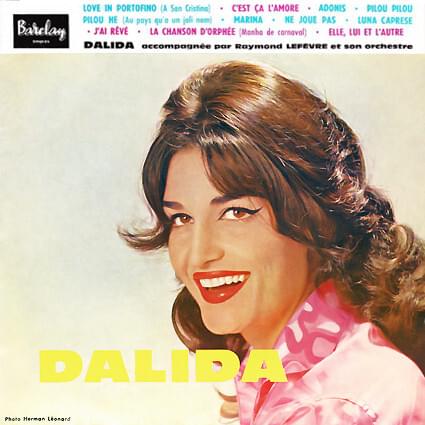
 View Artist