Song Meaning
The lyrics paint a stark picture of willful ignorance and the deliberate suppression of uncomfortable truths. The narrator repeatedly issues commands: "Don't talk about commitment," "Don't mention your fears," "Don't talk about the black man." This isn't just about avoiding difficult conversations; it's about actively shutting down any acknowledgment of problems, whether personal, societal, or political. The repeated phrase "It only causes problems / We got plenty of those" reveals a deep-seated, almost fatalistic resignation, suggesting that confronting issues is seen as an unnecessary complication rather than a solution. The dominant tone is one of anxious avoidance, a desperate attempt to maintain a fragile status quo by pretending that what is unsaid simply doesn't exist.
The central tension arises from the contrast between this enforced silence and the underlying reality that cannot be ignored. The nursery rhyme "Sing a song of sixpence" is twisted into a commentary on deception and neglect, where love for children is forbidden and a baby is left to cry. The jarring inclusion of "martin luther king" after the stooges "larry, moe and curly joe" suggests that even profound figures and movements are reduced to mere elements in a chaotic, nonsensical narrative, or perhaps that their struggles are being deliberately obscured. This juxtaposition highlights how important, and potentially dangerous, truths are being buried under a pile of triviality and absurdity.
The most striking metaphor is the recurring image of "handcuffs for Houdini." This powerful analogy captures the feeling of being trapped by something that appears to be designed for escape. Houdini was the master of breaking free from restraints, yet here, the restraints themselves are presented as the ultimate trick, a "con" that looks simple but is impossible to overcome. The lyrics suggest that the current situation, whatever it is, is similarly deceptive – designed to appear manageable or even illusory, but ultimately inescapable. The phrase "You know what's gonna happen / But you don't know how it's done" perfectly encapsulates this sense of foreboding inevitability coupled with a baffling lack of agency or understanding.
This lyrical construction is effective because it taps into a universal feeling of being stuck in a situation that defies logic and control. The stark, imperative commands create an immediate sense of unease, while the surreal imagery of the pie opening to reveal historical figures and comedians underscores the absurdity of the enforced silence. The Houdini metaphor provides a potent, memorable image for the feeling of being trapped by illusions, making the emotional weight of the narrator's anxiety palpable and deeply resonant.
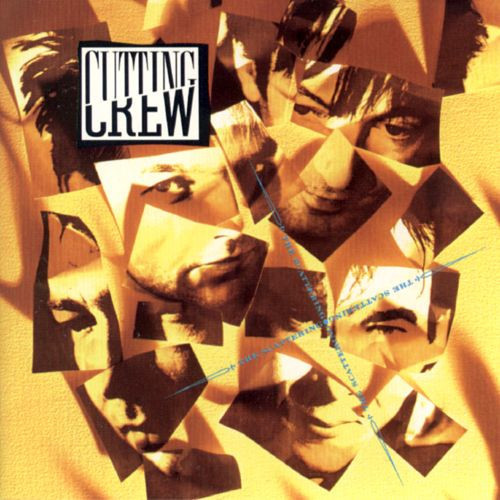
 View Artist