Song Meaning
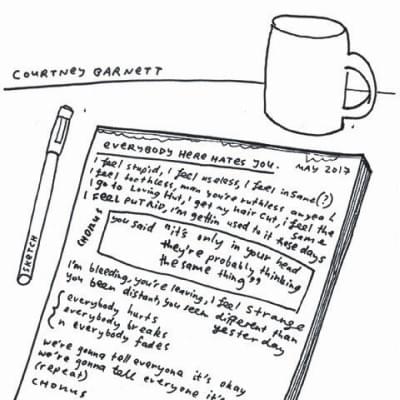
Courtney Barnett's "Everybody Here Hates You" isn't just a self-deprecating anthem; it's a raw, almost painfully relatable exploration of anxiety and the crushing weight of perceived inadequacy. The opening lines hit like a punch to the gut: "I feel stupid, I feel useless, I feel insane." It’s a laundry list of negative self-perception, amplified by the blunt admission, "I feel toothless, man you're ruthless." The banality of getting a haircut or visiting Loving Hut underscores the feeling that external changes are futile against internal turmoil. This isn't just sadness; it’s a deeper malaise, a sense of being fundamentally, irredeemably flawed. The repetition of "I feel putrid, I'm getting used to it these days" suggests a resignation, a weary acceptance of this negative self-image as a constant companion.
The chorus offers a fragile counterpoint to this despair. "You said, 'It's only in your head, they're probably thinking the same thing,'" is a classic reassurance, likely delivered by a friend or loved one. But its repetition, almost desperate in its insistence, betrays its inefficacy. It’s a mantra, a lifeline thrown to someone drowning, but ultimately unable to pull them ashore. The second verse introduces elements of relational strain: "I'm bleeding, you're leaving, I feel strange / You been distant, you seem different than yesterday." This hints at a possible trigger for Barnett's self-doubt – a failing relationship, or the fear of one. The assertion that “everybody hurts, everybody breaks and everybody fades” sounds at first like another comforting platitude, but the frantic repetition of “We’re gonna tell everyone it’s okay” takes on a darker tone. It’s not just about offering comfort; it’s about masking a deeper, more pervasive sense of unease.
Ultimately, “Everybody Here Hates You” functions on multiple levels. It's a brutally honest portrayal of the internal critic that plagues so many of us, amplified by the anxieties of modern life. But it’s also a commentary on the inadequacy of simple reassurances in the face of deep-seated self-doubt. The song resists easy answers, instead offering a stark and unflinching look at the cyclical nature of anxiety and the struggle to find genuine connection in a world that often feels alienating. The song meaning isn't necessarily about being hated; it's about the fear of it, and how that fear can warp our perception of reality. Through her signature blend of wry observation and emotional vulnerability, Courtney Barnett captures the quiet desperation of feeling utterly alone, even in a crowded room.
 View Artist