Song Meaning
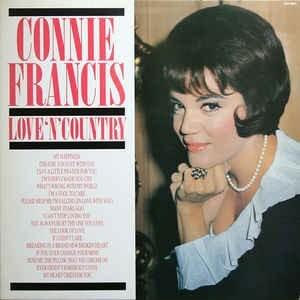
Connie Francis's rendition of "I'm a Fool to Care" isn't just a country-tinged ballad; it's a raw, unflinching dissection of emotional masochism. The song meaning circles the kind of love that persists against all rational judgment, a love fueled by a cocktail of hope and self-deception. The repeated declaration, "I'm a fool to care," acts as both a lament and a stubborn affirmation, acknowledging the pain while simultaneously refusing to relinquish the feeling. It's that internal push-and-pull that gives the song its enduring power. The speaker isn't simply a victim; she's an active participant in her own heartbreak. There’s a strange comfort, even a twisted sense of control, in knowing and accepting one's foolishness.
The genius of "I'm a Fool to Care" lies in its simplicity. The lyrics themselves are straightforward, almost childlike in their directness. There are no elaborate metaphors or complex narratives, just a plainspoken confession of vulnerability. But within that simplicity resides a profound truth about the human condition: the capacity to cling to love even when it hurts. The admission "I know I should laugh / And call it a day / But I know I would cry / If you went away" encapsulates the core conflict. It’s the fear of loss outweighing the pain of the present, a calculation many have made in the quiet corners of their hearts.
Francis’s interpretation, like many before and after, taps into the universality of this experience. It's a portrait of a woman caught in a loop of unrequited affection, fully aware of the futility yet unable to break free. The final repetition of "I'm a fool to care" doesn't resolve the tension; it amplifies it. It's not a moment of epiphany or self-liberation, but rather a resigned acceptance of a painful truth. The song resonates because it captures the messy, irrational, and often self-destructive nature of love, reminding us that sometimes, the heart simply refuses to listen to reason.
 View Artist