Song Meaning
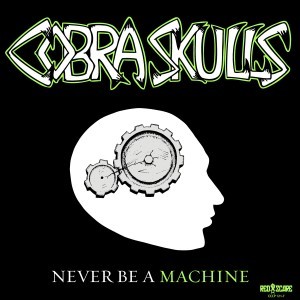
The narrator asserts a fundamental difference between themselves and a "machine," a distinction rooted in the presence of a heart and soul. This isn't just a philosophical musing; it's a defiant stance against external control. The repeated phrase "I will never be a machine" acts as a mantra, emphasizing a commitment to an internal, emotional compass rather than programmed logic. The lyrics suggest a world where people are easily manipulated, their beliefs about fate and the afterlife dictated by external forces, but the narrator refuses to be swayed.
The core tension lies in the struggle for autonomy against forces that seek to "control" and dictate one's inner life. The narrator contrasts their own reliance on their "heart" and "conscience" with the perceived soullessness of those who "think like a machine." This implies a critique of systems or individuals who prioritize logic or external directives over genuine feeling and self-awareness. The fear isn't just being controlled, but the existential consequence of losing one's "soul" in the process.
The most striking element is the direct challenge to the listener: "You just might be one if you don't know what I mean." This immediately implicates the audience, forcing them to consider their own susceptibility to control. The narrator's assertion of having a soul, proven by their conscience, is a powerful counterpoint to the idea that such things are unknowable or dictated by dogma. It’s a personal, internal validation of existence beyond mere function.
Ultimately, the effectiveness of these lyrics comes from their raw, declarative nature and the clear dichotomy they establish. The simple, repeated assertion of not being a machine, coupled with the urgent plea not to lose one's soul, creates a potent message of self-preservation. It’s a call to recognize and trust one's inner voice against the pressures of conformity and external manipulation.
 View Artist