Song Meaning
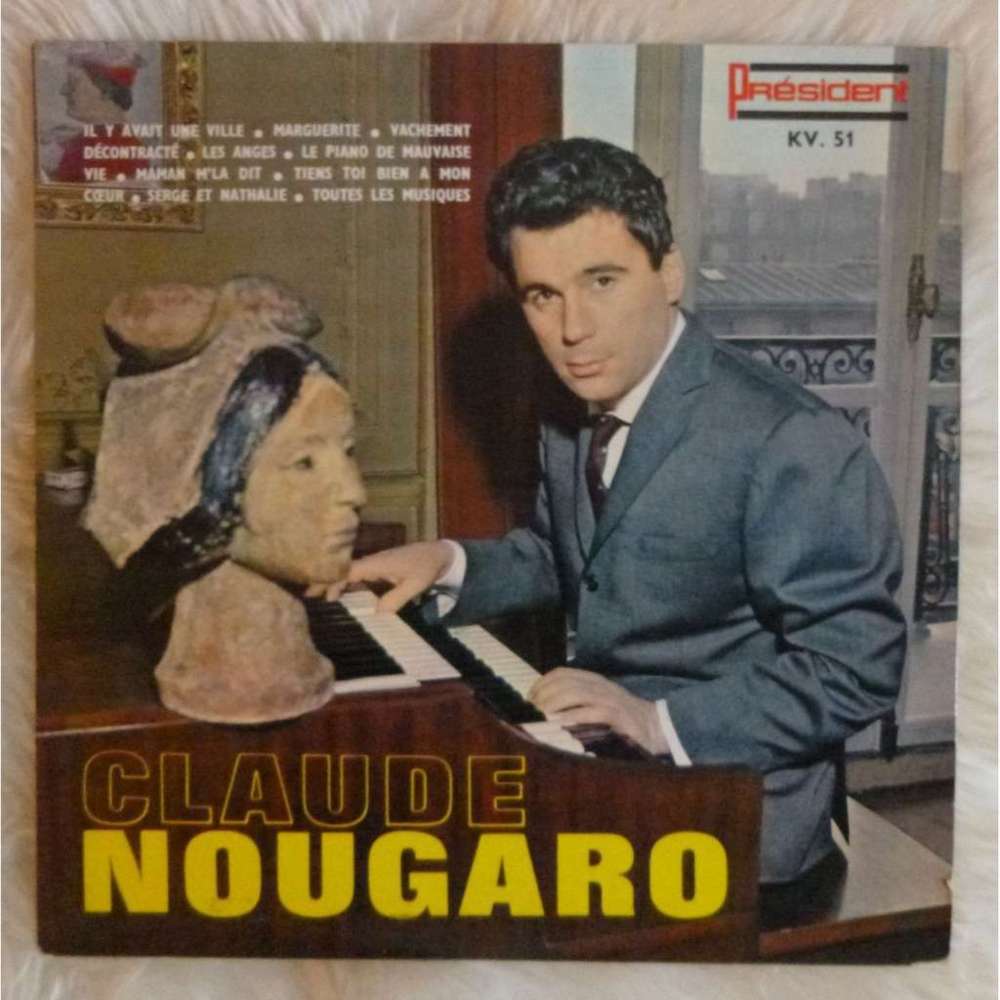
Claude Nougaro's "Vachement décontracté" isn't just a Gallic shrug set to music; it's a study in performative nonchalance. The song's core revolves around the repeated assertion of being "vachement décontracté" – incredibly relaxed, utterly unbothered. But like any well-constructed persona, the cracks in the facade are what make it compelling. Nougaro isn't simply stating a fact; he's actively constructing an identity, perhaps as a defense mechanism against the inevitable slings and arrows of life. The almost comical repetition hints at a subconscious effort to convince himself, and perhaps the listener, of his unwavering composure. It's the carefully curated apathy of a man trying very hard not to care.
The song's verses offer glimpses into the sources of this carefully constructed detachment. He claims his relaxed state isn't due to anemia or some lingering adolescence, but rather a conscious philosophical choice. He finds solace in the vicarious thrills of Western films, a passive observer safely distanced from real-world drama. This speaks to a desire for excitement without the emotional investment, a controlled release within the confines of a darkened cinema. The mention of Lulu, a woman who briefly disrupted his carefully cultivated equilibrium, further exposes the vulnerability beneath the surface. Her impact is described as a "typhoon, a seismic event," suggesting a profound emotional experience that momentarily shattered his composure.
Ultimately, “Vachement décontracté" reveals the tension between genuine emotional experience and the desire to project an image of unflappable cool. The fact that he felt the need to declare and reinforce his relaxed state so emphatically underscores its fragility. The casual dismissal of heartbreak ("Lulu et moi / On s'est quittés") and the seemingly content acceptance of a simple life ("Tant qu' j'ai un toit / Et de quoi croûter") are perhaps less a testament to his philosophical acceptance and more a carefully constructed narrative designed to mask a deeper, more complex emotional reality. Nougaro, with his characteristic wit, invites us to question the authenticity of detachment, suggesting that even the most dedicated practitioners of nonchalance are ultimately susceptible to the human condition.
 View Artist