Song Meaning
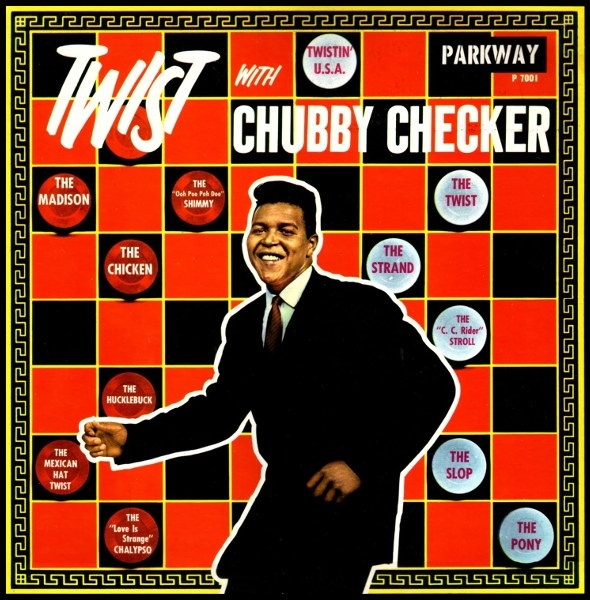
{"song_id": 13536321, "meaning": "Chubby Checker's \"The 'Mexican Hat' Twist\" isn't so much a song as it is a cultural artifact, a snapshot of a very specific moment in American pop. Deconstructing its meaning requires less lyrical analysis and more anthropological excavation. The tune grafts the then-ubiquitous Twist craze onto the traditional Mexican Hat Dance, a maneuver that, viewed through a modern lens, lands somewhere between cultural appropriation and dance-craze opportunism. It's a sonic embodiment of early 1960s exuberance, fueled by a naive, perhaps oblivious, sense of cultural exchange. The driving force here is less about artistic expression and more about infectious rhythm; Checker's simple instruction to 'twist some more' becomes a mantra, a call to collective, if somewhat culturally muddled, movement. It's about the *feeling* of the twist, a primal urge to move and connect, however awkwardly, with a vaguely 'exotic' other. \n\nOn a deeper level, the song's repetitive structure and simple directives ("everybody twist," "cha-cha") taps into a fundamental human desire for social cohesion. Dance crazes, at their core, are about belonging. By layering the Twist—a symbol of youthful rebellion and individual expression—onto the structured choreography of the Mexican Hat Dance, Checker creates a fascinating tension. It's a push and pull between individual freedom and communal participation, mirroring the broader societal shifts occurring at the time. The call to go 'south of the border' acts as a symbolic invitation to explore new cultural territories, albeit through the somewhat reductive lens of a dance craze. The simplicity of the lyrics belies a complex interplay of cultural forces, making \"The 'Mexican Hat' Twist\" a curious, if somewhat problematic, piece of pop history.\n\nUltimately, the song's enduring (if ironic) appeal lies in its unadulterated joy. It's a celebration of movement, a testament to the power of rhythm to transcend cultural boundaries, even if those boundaries are occasionally blurred in the process. The listener can choose to unpack the cultural implications, or simply succumb to the infectious beat and, as Checker commands, 'twist some more.' The track's meaning becomes a reflection of the listener's own relationship to cultural exchange, appropriation, and the simple, undeniable pleasure of a good dance craze. It's a reminder that pop music, even at its most seemingly frivolous, can be a surprisingly potent carrier of cultural meaning."}
 View Artist